

Sure duck is technically “poultry”, but when it comes to cooking this aquatic fowl, traditional cooking techniques just won’t do. Here are a few temperature tips that will help you get your duck done right.
Duck and turkey are hardly birds of a feather. It is well known that turkeys have both white and dark meat. This differentiation comes from how their muscles are used. The breast is a fast-twitch muscle meant for sudden burst of movement; unlike the slow twitch muscles of the thighs and legs. Thighs and legs are used on a more consistent basis and store much more myoglobin. Myoglobin is an iron and oxygen binding protein found in the muscle that contributes to the meat's darker color and richer flavor.
Now consider the duck, which much like the turkey has differing degrees of dark meat. Though duck meat in general is much darker, closer to lamb or beef, with its myoglobin a rich purple color.
That being said, the breast is still lighter and should only be heated to 135°F (57°C) to avoid drying out the meat. The thighs and legs, on the other hand, should be heated to 165°F to help break down connective tissue and produce a more tender dish. One of the most common ways of cooking a duck is roasting.
For the perfect roasted duck Ina Garten recommends boiling the whole bird in a broth of your choice for 45 minutes. This will help cook the bird evenly, then pat dry and move to a 500°F (260°C) oven to crisp up that skin and until the breast reaches an internal temperature of 135–140°F (57–60°C).
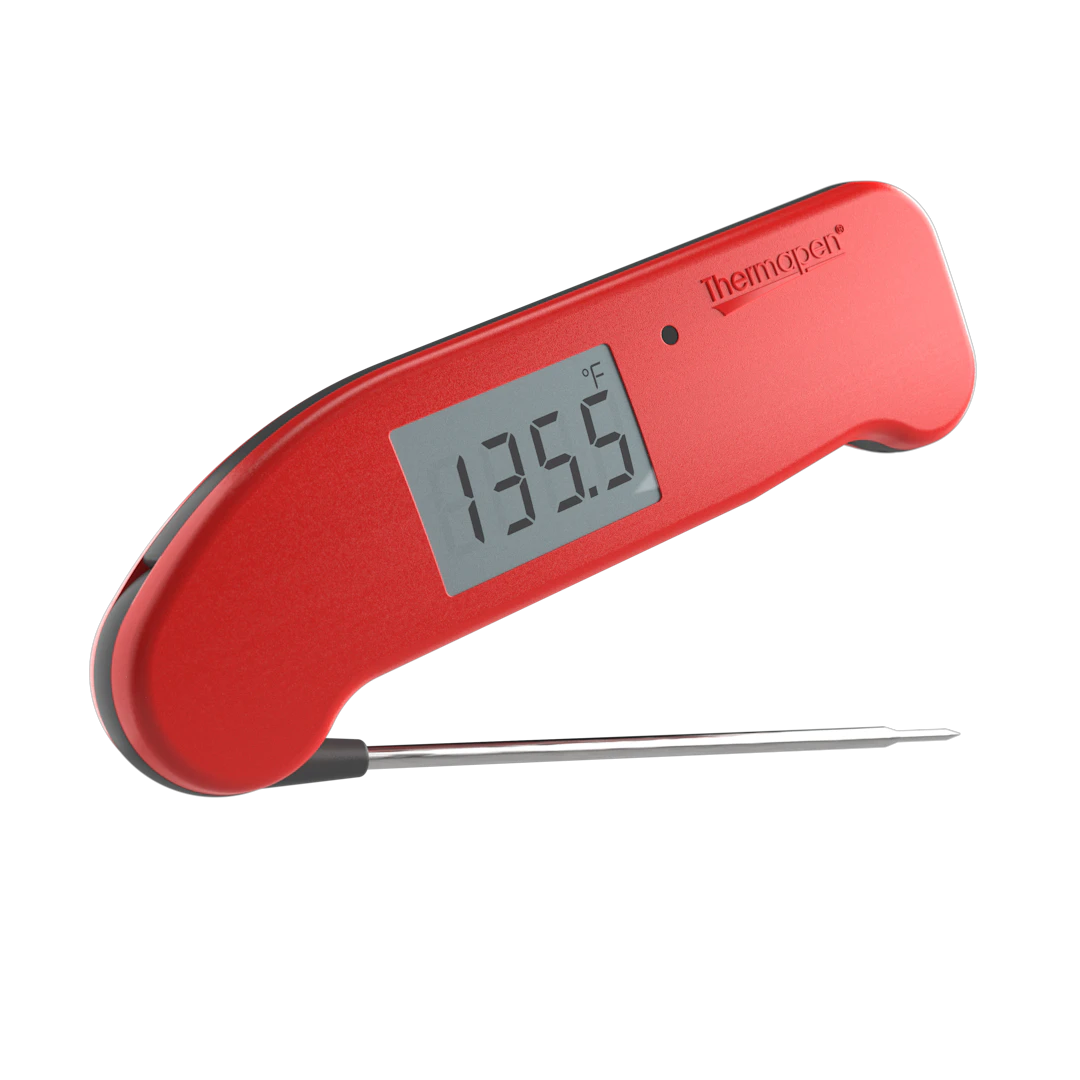
The ChefAlarm® and Thermapen® are perfect companion tools for this dish. Between the constant monitoring of the ChefAlarm and the instant-read capability of the Thermapen®, you can know where your meat is in the process at all times.
Most may see 135°F (57°C) and think that that's much too low for a poultry dish, and generally, you would be correct. The USDA recommends 165°F (74°C) internal temperature for all poultry. But because duck is not a common carrier of salmonella and its meat is more akin to lamb or beef, Hank Shaw, author and chef, says that “Rare-to-medium is the mantra” when it comes to duck breast. And, with medium rare ranging from 130 to 135°F (54 to 57°C) according to the USDA, this fits perfectly with the cooking of this less common bird. When it’s time to serve the breast, cut it against the grain of the meat in relatively narrow widths. This helps tenderize the breast, while still keeping it juicy.
Resources:
Hunter, Angler, Gardener, Cook
Food Network
For more on cooking duck breast and on duck temperatures, see our post on Pan-Seared Duck Breast: Thermal Principles




0 comments