

Rich, flavorful eggnog (also spelled in two words: egg nog) is definitely a holiday favorite; and if you haven’t ever tried making your own, you’re in for a treat—you won’t go back to store-bought again. The ingredient that gives eggnog its signature rich, silky texture is, well...eggs! There are many eggnog recipes that simply use raw eggs in them, but the use of raw eggs carries with it a risk of salmonella. According to foodsafety.gov, custards (a cooked mixture of eggs and dairy) and other dishes containing eggs must be cooked to 160-170ºF (71-77ºC) to be considered safe to eat. Thermapen® ONE is ideal for testing the temperature of your custards!
The Role of Eggs in Custards:
1. The protein in eggs coagulates and solidifies once they reach about 140-145ºF (60-63ºC), providing structure.
2. Egg yolks contain lecithin. Lecithin emulsifies ingredients that usually would not mix together, mainly fat and water.
3. Eggs add richness to both the texture and flavor of custards.
Crème Anglaise Method: This process of making a stirred custard with milk, eggs, and sugar is essentially the method for making crème anglaise or classic vanilla custard sauce. The tricky thing about making a stirred custard is its susceptibility to curdling. If you get the mixture too hot, your beautiful custard sauce will resemble runny scrambled eggs. Not very appetizing.
How to Make Custard For Eggnog
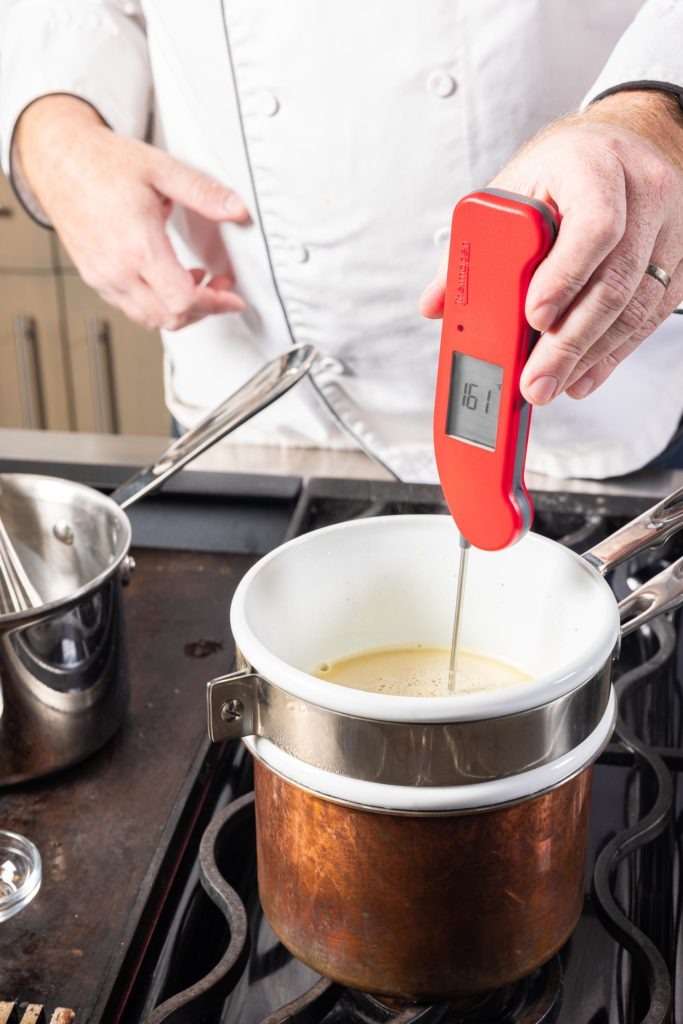
1. Use a Double Boiler: In this recipe by Jean at Delightful Repast, the custard is made in a double boiler. This is a very gentle method of cooking and helps to keep the mixture from curdling. It’s important to constantly stir the custard to keep the proteins in motion as they rise in temperature between 140-170ºF (60-77ºC) and begin to coagulate. This gentle coagulation will thicken the sauce, but if it isn’t kept in motion the protein can take on a grainy texture, so keep stirring!
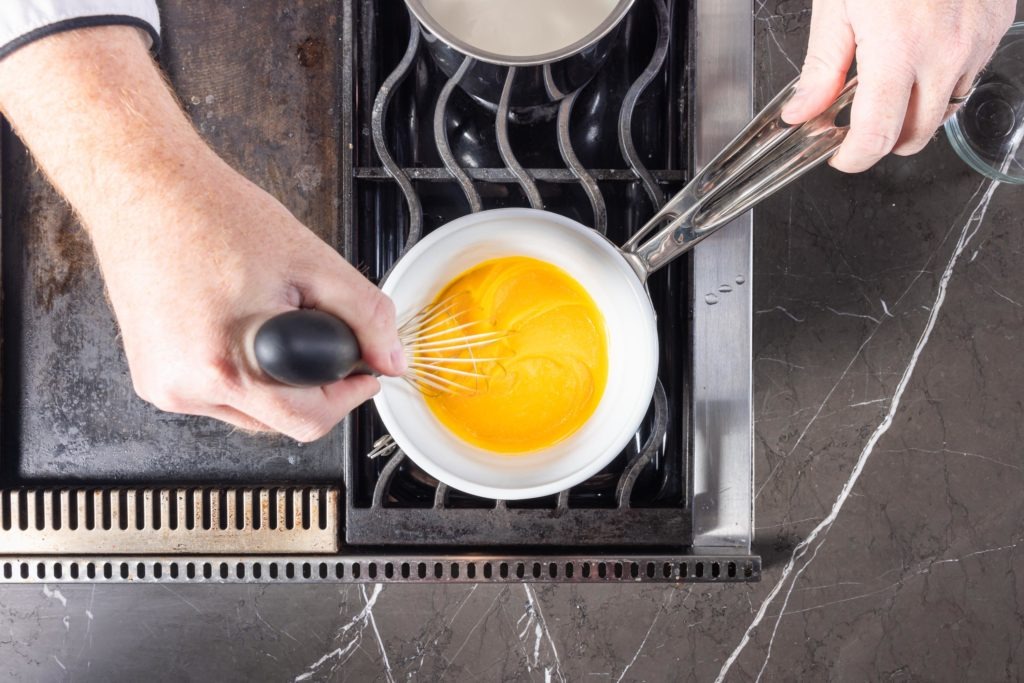
2. Use Your Thermometer: As custards are prone to bacterial growth, it’s critical that they move quickly through the temperature danger zone of 40-140ºF (4-60ºC), so the hot milk you add needs to be simmered. Remember, accurate temperature control when cooking with eggs is important for food safety and the proper structure of the recipe they are used in. Keep your Thermapen handy and occasionally spot-check the custard as the temperature rises (then back to stirring). When you reach 160ºF (71ºC), it's time to cool it down. The addition of cold milk after cooking will hasten the cooling process.
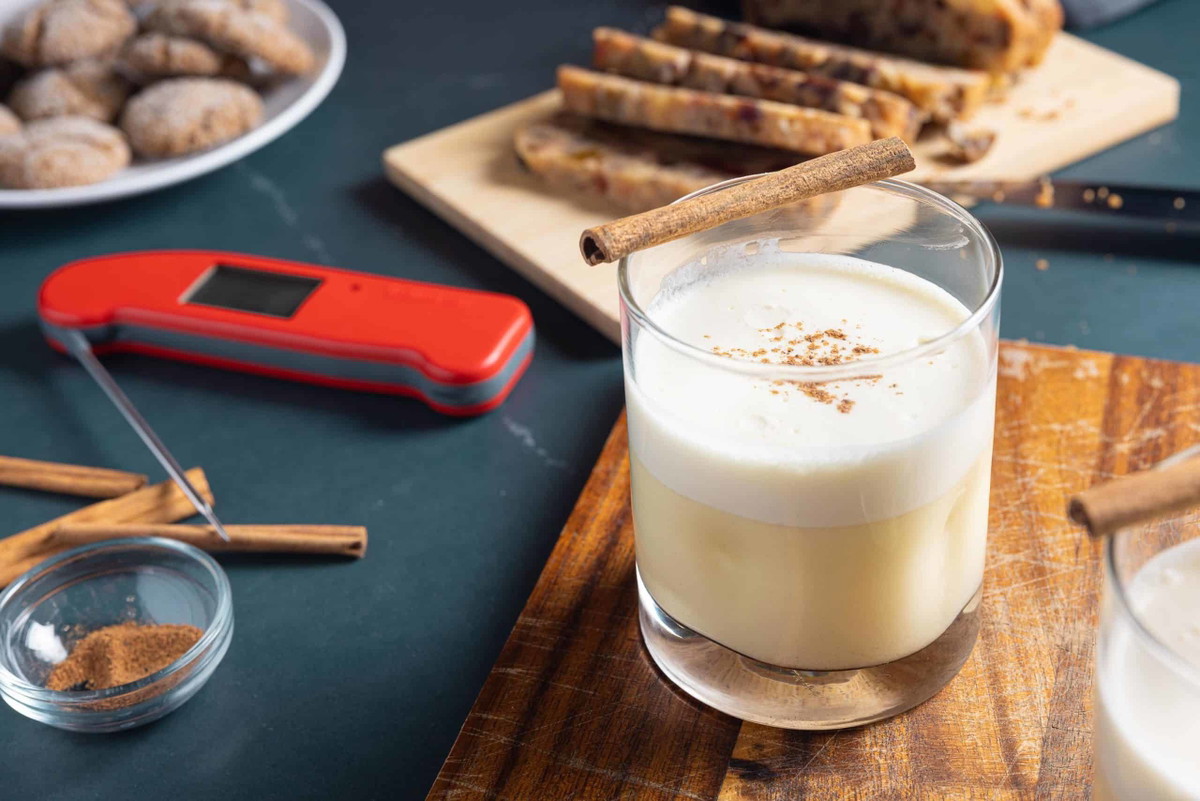
Eggnog is the classic winter drink that makes any winter day feel like a party. Here, just in time for the holidays, is a recipe for a delightful homemade eggnog without those worrisome raw eggs.



0 comments