

One thing that I love about travel is the opportunity to try new foods wherever I go. Even within the U.S., even within one state there are regional cuisines, regional variations, and regional specialties that can hardly be found anywhere else. Whether it's the fried pork loin sandwich of the Midwest or Kansas City's sliced BBQ pork, America's backroads teem with hidden gastronomical gems.
One particular gem which used to be obscure is the famous Nashville Hot Chicken: Fried chicken coated in a vinegar-less cayenne sauce that, at its hottest, is potent enough to bring some people to tears. This dish has become so popular in the American culinary mind that even a certain Colonel's restaurant started serving it. Or a pale, weak imitation of it.
For the real thing, you have to go to Nashville. (Though it may have been eaten by individuals for ages, the restaurant version of hot chicken traces its origin to a local restaurant there called Prince's Hot Chicken.) But for the next best thing, you can make it at home. This version may not be the Prince family's recipe (this one comes via Bon Appétit), but it makes one dang fine chicken that will not disappoint when it comes to the heat. And with our temperature tips and tools, it's super easy to get right.
What makes hot chicken so hot?
What makes Nashville chicken so hot? Cayenne. Yes, that's right, just good old powdered cayenne pepper. In general, all the chicken joints mix cayenne‚ and sometimes other spices and seasonings, with oil or lard. This is then brushed/rubbed/otherwise applied to freshly fried chicken. Some incorporate cayenne into the breading of the chicken as well. The result is, well, hot, obviously.
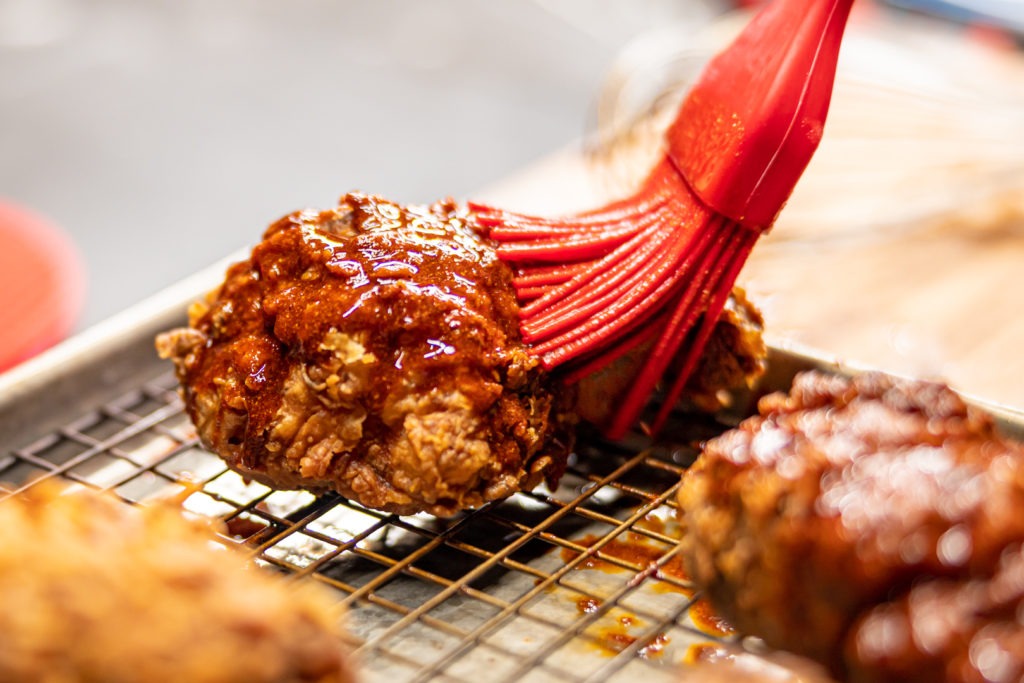
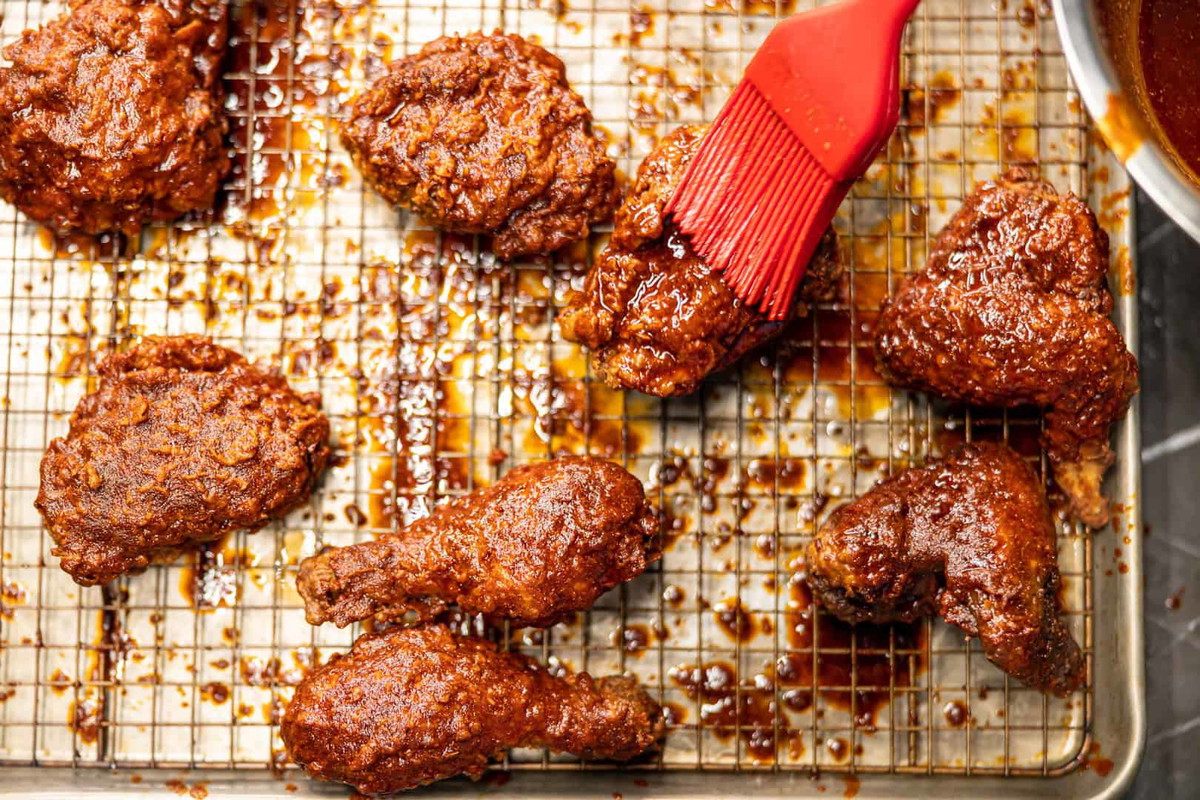
In the case of this recipe, the cayenne (along with some chili powder, paprika, sugar, and garlic) is combined with hot oil from the fryer. The resulting chili oil has bright, almost fruity flavors from the bloomed chilies. It does not taste like boring dried spices.
We should pause here to talk about heat. Almost all hot chicken restaurants have heat levels for their chicken ranging from mild to extreme. Most often, how hot it is depends on how much of the cayenne/oil mixture is applied, and you can do the same with this recipe. Add more or less of the oil/chili mixture to vary the heat. In fact, the cayenne will settle out of the oil rather quickly, so if you want it mild, just baste some of the thin chili oil onto the finished chicken. If you want more heat, stir it up well and then use the coating, and if you want it hot, let it settle out a bit then scoop some of that settled cayenne mix out of the bottom of the bowl with a spoon or brush. It's absolutely fantastic.
And it isn't just fantastic for the heat. Anyone can make something spicy—that's not impressive. What matters is how that spice works with the flavors of the dish as a whole. The garlic, the paprika, the sugar all work together with the crisp breading and the juicy meat to make chicken that I went back for seconds on, despite my burning lips.
This chili-oil approach to seasoning does one more thing for the chicken, too. It preserves the crispiness. If you were to toss breaded chicken in, say, wing sauce, it would immediately start to get soggy, but basting it in oil has no such effect. The chicken stays crisp longer with this seasoning method.
Breading hot chicken
The breading for this version of hot chicken consists of salted flour [footnote]you could add cayenne if you wanted to live dangerously...[/footnote], and a bath of buttermilk, beaten eggs, and a splash of hot sauce. The chicken is dipped in the flour, then in the buttermilk, then back in the flour mixture. This double-dipping gives the chicken a crunch that will see you through any cayenne pain and right into your next bite.
But before the chicken is breaded, it gets a dry brining in a mixture of salt and plenty of black pepper. [footnote]One could add cayenne here, too, if one were so inclined.[/footnote] Give it a few hours in the dry brine at least, but overnight would be even better.
Chicken frying temps
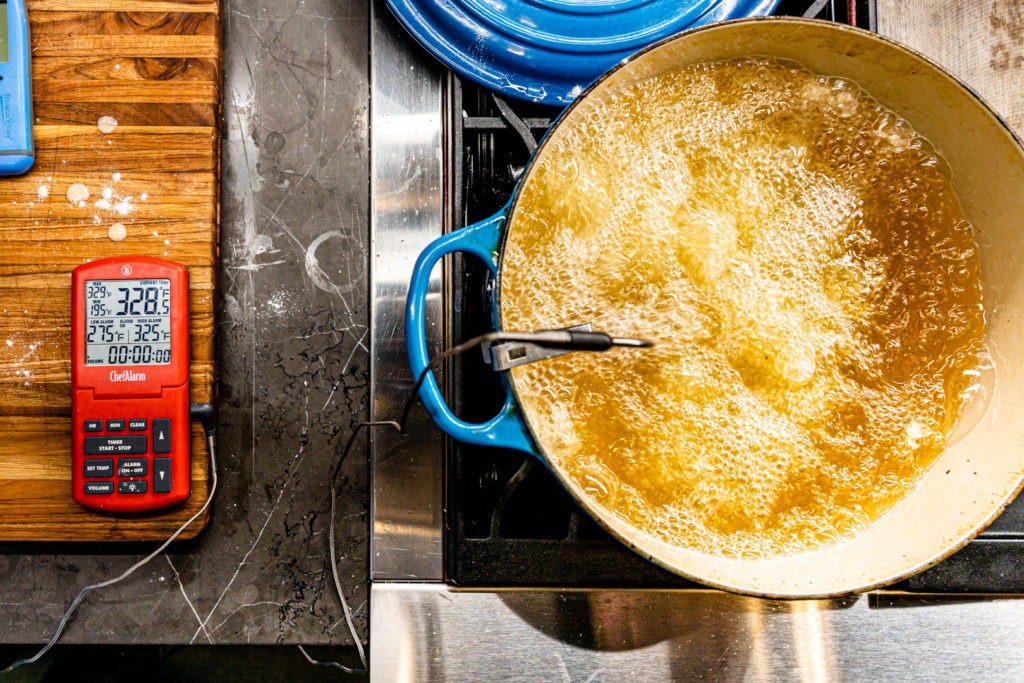
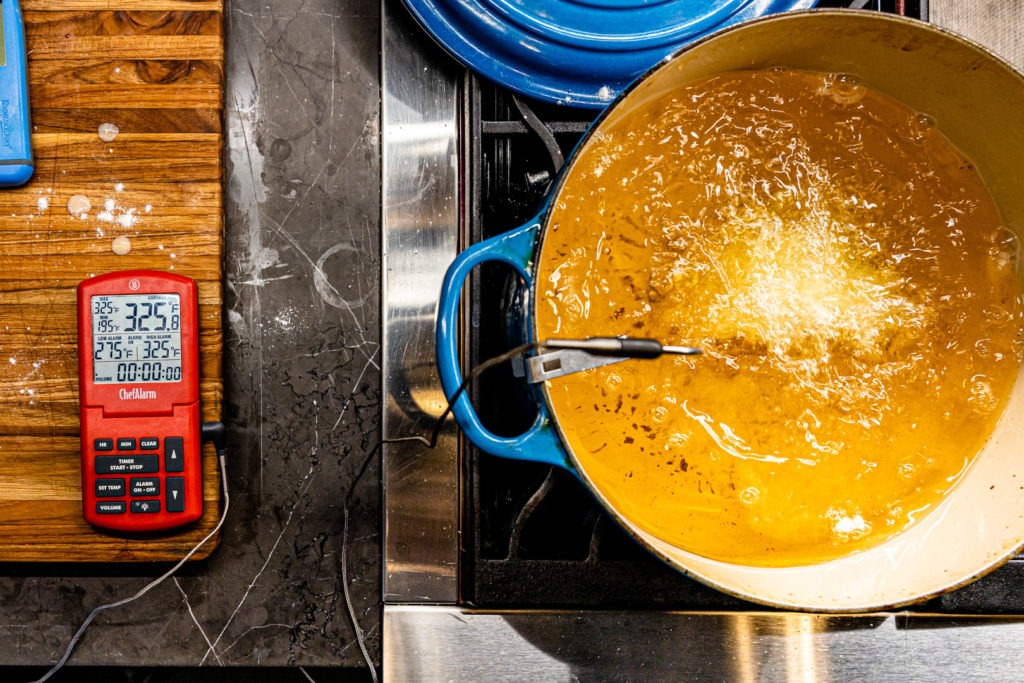
No matter how much cayenne sauce you pack onto your chicken, it just won't be any good if it's overcooked. So what temps do we need to get crisp, not soggy crust and fully cooked—but not overcooked—chicken? We go over the full problem/solution set for fried chicken in another post, but, to be brief, we want our oil at 325°F (163°C). 325°F (163°C) May seem like a bit of a low temperature for frying, and it kind of is. But that lower temp is important to give our meat time to cook without burning our breading. Adjust the heat to keep it as close as possible to 325°F (163°C) throughout the cook. Use a ChefAlarm® with a high-temp alarm set for 325°F (163°C) and a low alarm set for 300°F (149°C) to monitor the oil temp and alert you if it goes outside the range you want.
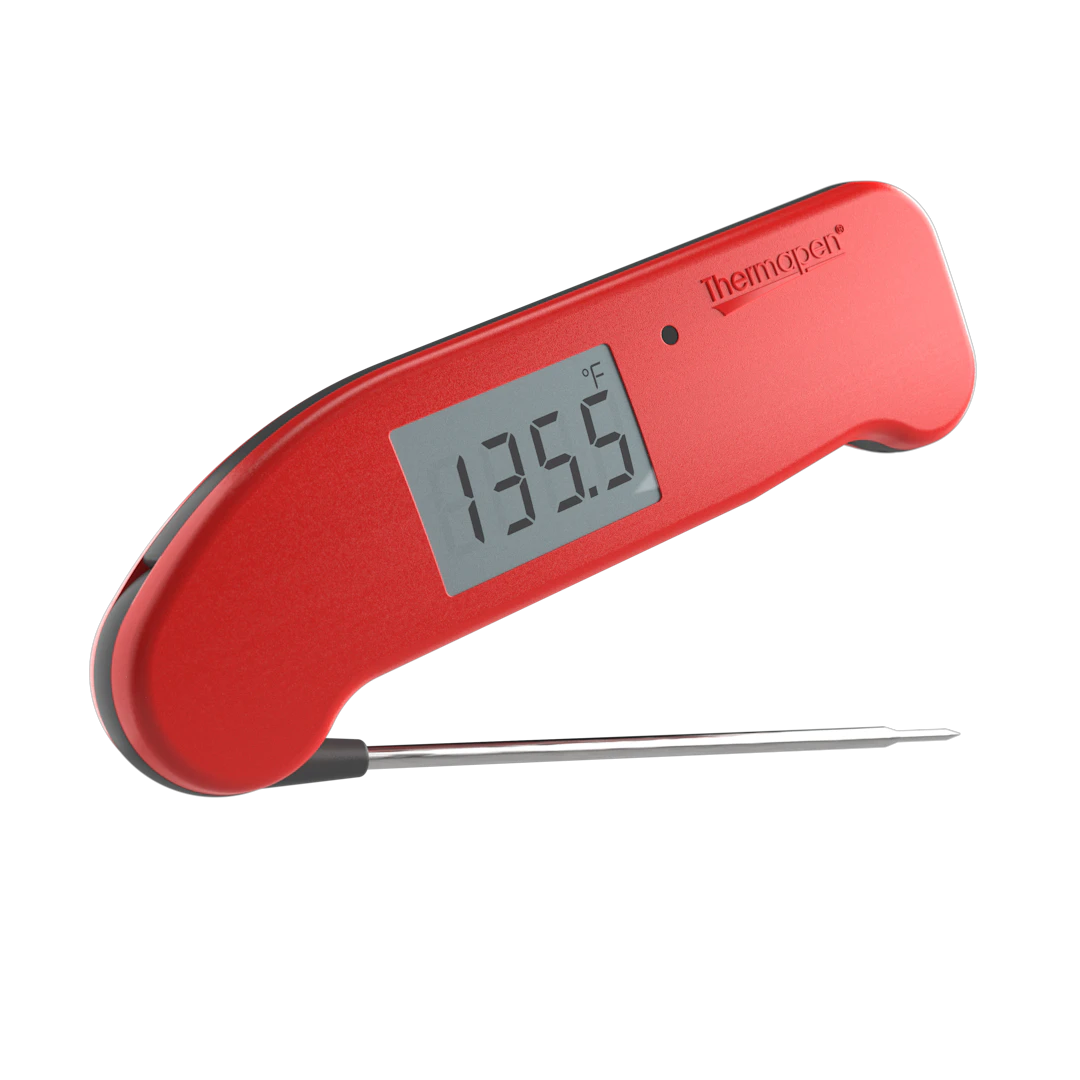
The chicken itself takes a little thought. The white meat of the breasts (and wings) need to cook to 160°F (71°C) for safety, but should not cook any higher or it will dry out. But the dark thigh and leg meat is best done at 175°F or even higher, up to 190°F (79°C and 88°C respectively). Check each piece with an accurate, fast thermometer like the Thermapen®.
This recipe makes 10 pieces of chicken, but it can easily be doubled for a big gathering. I do not have a fryer that can accommodate 10, let alone 20 pieces of chicken, so I cooked mine in batches, putting the fried pieces in an oven set to warm until they were all finished. Then I basted them all with cayenne oil and got to eating.
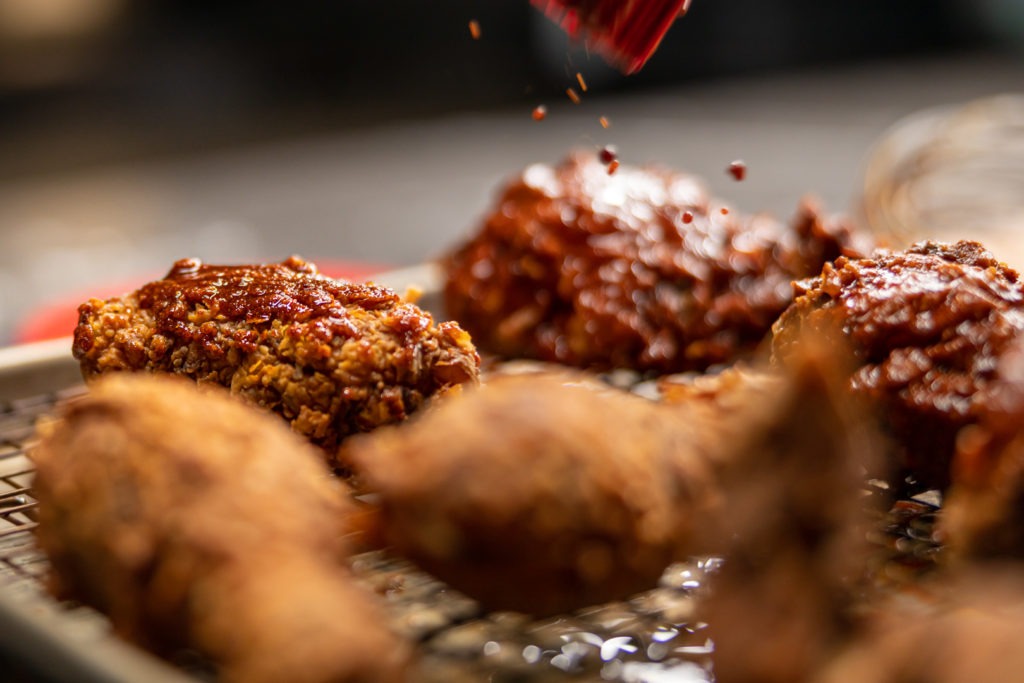
I cannot recommend this recipe highly enough. If you love spice, it is a joy to eat. It's hot enough to make me sit up and agree that "hot chicken" is a legitimate and appropriate appellation, but not so hot that I don't want to finish this piece … and maybe one more. And with the ChefAlarm and Thermapen on your side, there's no guesswork for the critical oil temps or the critical doneness temps. You just cook it to the right temp and enjoy the results. And enjoy you will, I believe!
Oh, don't forget to serve this chicken with the traditional white bread and pickle slices. Tradition, after all, is tradition.




0 comments