

Did you get your deer this year? Your elk? Perhaps a pronghorn? Maybe you just like venison and, like us, ordered some delicious and tender medallions. Either way, now you have the meat and you want to cook it right. Venison dries out easily because of its leanness, so temperature control is of the utmost importance, especially in tender cuts like the loin and backstrap.
In this post, we hope to help you cook your venison better. To do that you need to cook to temp, and you need to use a good sauce. We’ve adapted a recipe from Hank Shaw at Honest-food.net that has bold, rich flavors and balances against the gaminess of venison very well. If someone in your family doesn’t like venison, try serving them this dish—it might well change their mind!

What is steak Diane?
Steak Diane goes back to August Escoffier in his immortal book. He named a number of dishes “Diane,” and the link between them all was game. Whether it was a pheasant consommé or a sauce made with leftover bits of venison, dishes that came from hunted animals were given the appellation Diane, named after the goddess of the hunt Diana.
Though the version we present here is a far cry from Escoffier’s original Sauce Diane, the spirit of it remains true to the original.
Venison doneness temperatures
If you harvested your own animal, of course you should use the loin for this recipe, but even if you don’t hunt (or didn’t bag one this year) you can still have this dish! We got our venison from Force of Nature Meats, and loved the flavor as well as that beautiful, dark red color.
Venison behaves in many ways like beef, albeit very lean. You can cook the tender, steaky cuts of venison to the same doneness levels as you would beef, namely 130–135°F (54–57°C) for medium rare and 135–145°F (57–63°C) for medium. Hitting those temperatures just right is important for maximum enjoyment. Luckily, we have a great method for it.
Cooking venison medallions
Getting both a good, seared crust and a perfect doneness temperature on our venison takes a little maneuvering. First, start by drying the surface of the medallions with paper towels to remove excess surface moisture, which will take up lots of heat to cook off before browning can kick in. Then, sear the cutlets in hot fat (butter for us, please!), turning frequently to achieve a deep brown sear.
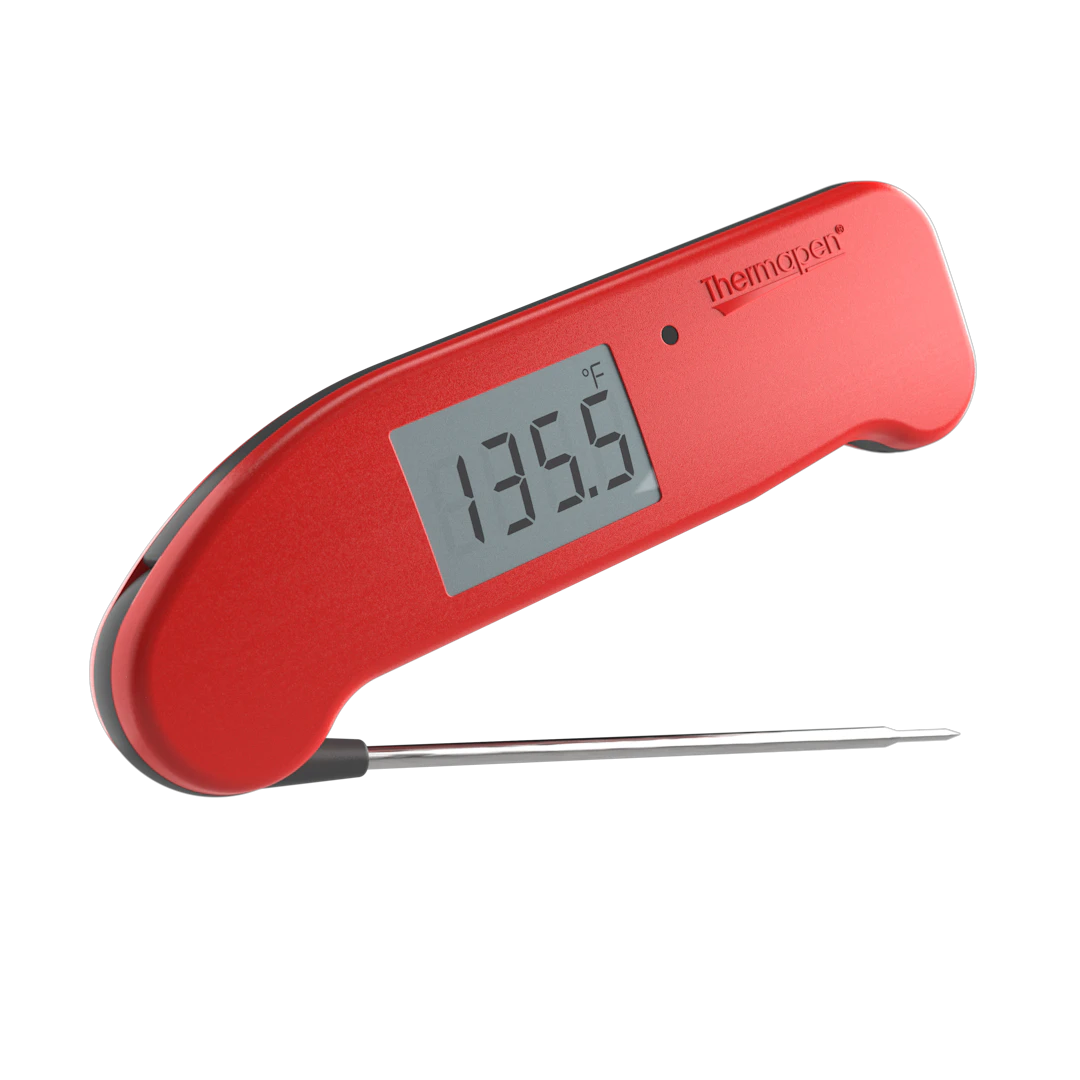
Once the steaks are seared, remove them from heat and set them aside. If you temp them at this point, using your Thermapen® ONE, you’ll find that the steaks are nowhere near done. Ours were somewhere in the range of 90°F (32°C). In the pan with all that browned-on meaty goodness (fond, we call it), you then make your sauce. Shallots, garlic, and mushrooms, all sauteed together, then combined and cooked with stock, brandy, mustard, Worcestershire sauce, and tomato paste makes the base of the sauce.
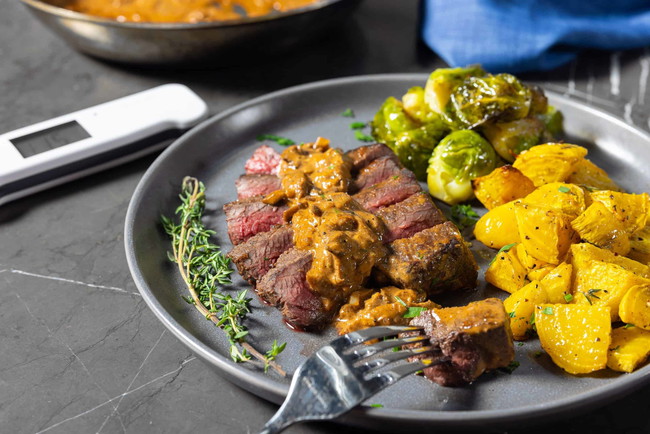
Once the sauce has reduced somewhat, put the medallions back in the pan. Bathe them in the sauce as it gently simmers, and check their temperatures every minute or so. When you get to within 5°F (3°C) or your desired finish temperature, pull them from the sauce. By searing it hard and gently poaching it up to temperature we ensure beautiful, rosy doneness.

Once the venison is done cooking, the sauce is finished—thickened more until a silicone spatula pulled through the pan leaves a clear path, thinned with a little water if it is too tight— with a dose of cream. The medallions are then served with the sauce and, for best results, some well-roasted vegetables.
Venison really is a special meal—especially the medallions. It’s a rare treat, in both senses of the word. And though it can be gamey, this sauce dresses it so well that even the pickiest eater should find it delicious. The two-stage cooking is gentle and helps guarantee a perfectly done result, and the juiciness of the sauce helps to compensate for venison’s natural toughness. It is a delight and one that we hope you try!


0 comments