

Focaccia is the bread you need to be making right now. The "daily bread" of thousands of Italians, it has been making fast inroads into American culture thanks to beautiful and inspiring posts all over social media. But how can you be sure your focaccia turns out sandwich-perfect every time? With temperature, of course! Follow our temp tips below for perfect focaccia, starting with your first batch.
What is focaccia?
Focaccia is an Italian yeasted flatbread, often of high hydration, that is cooked in a pan. Its name comes from the fact that in Roman times it was cooked in the embers of the hearth, which is called focus in Latin. Focaccia is the bread baked in the focus. The bread from southern France, fougasse, shares the same etymology and often the same simplicity of recipe, but is often baked free-form on a stone, not in a pan.
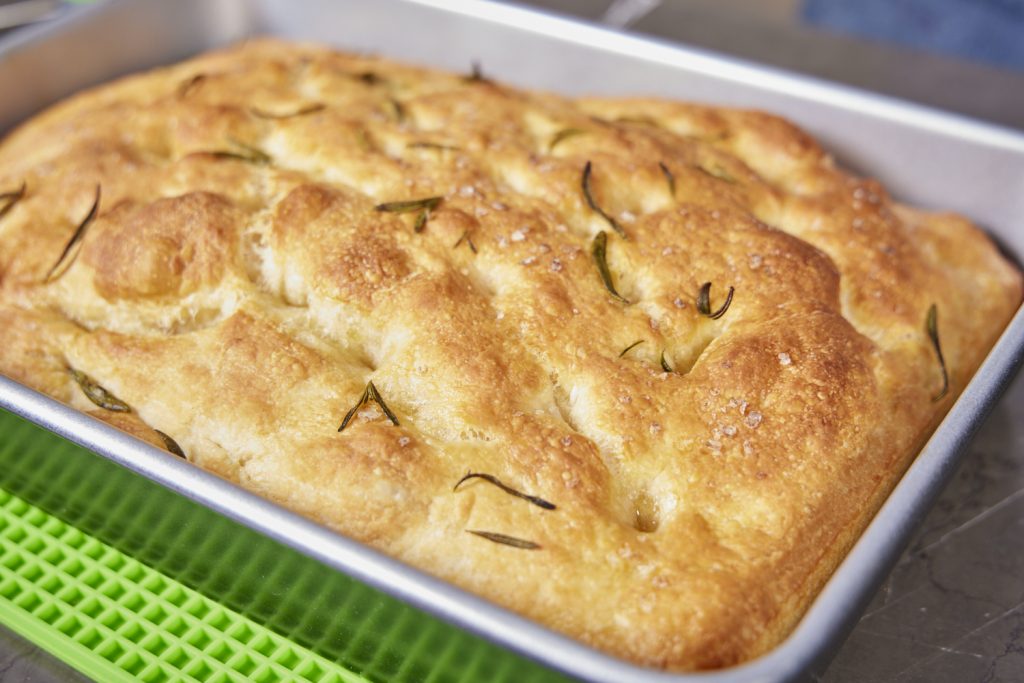
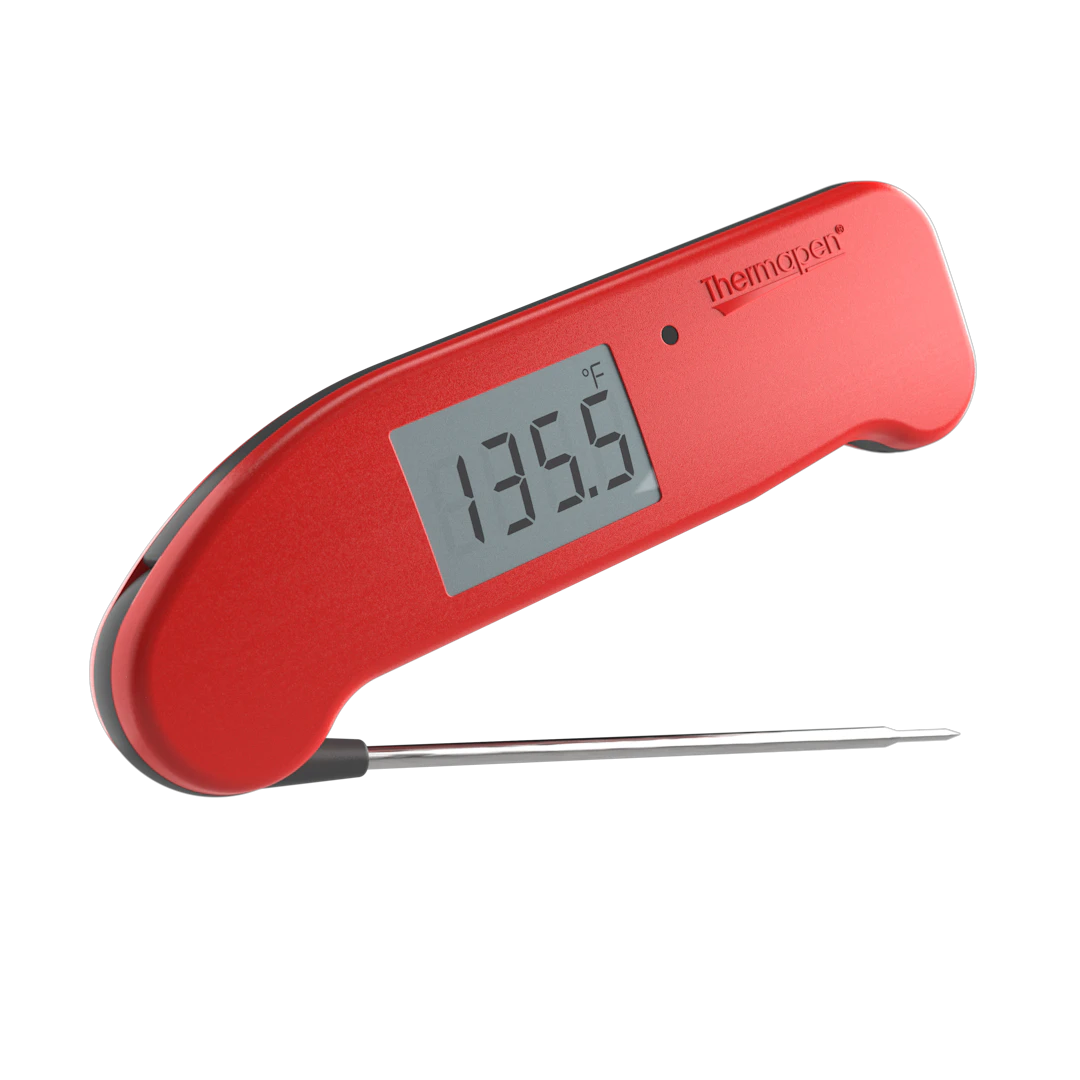
Focaccia is a lean-dough bread—there is almost no sugar in it and there is no fat in the dough to enrich it. That means that it is done cooking between 190 and 210°F (88 and 99°C). (Yes, bread—even focaccia—has doneness temps, and no, you're not figuring out if this bread is done by thumping it on its bottom, nor should you go by color alone. Use your Thermapen ONE to check the doneness of the bread in its center to be sure that the middle isn't still doughy.)
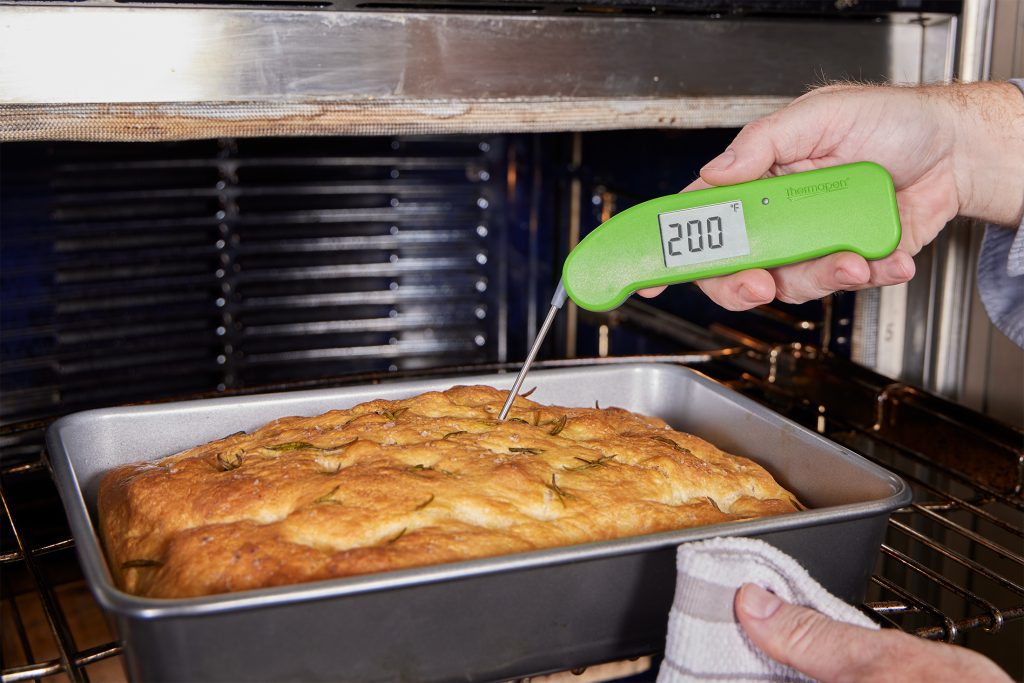
If you're thinking to yourself that there's no way focaccia is a lean-dough bread, I was right there with you. After all, one of the key characteristics of focaccia as we see it now is a solid drenching of olive oil. But in fact, the bread has no oil added in its dough stage, making it lean. And that is evident in the way focaccia is used in Italy, where it is a daily bread, made fresh for the day, and eaten on the day. It doesn't keep well, staling quickly. But if you eat it fresh on baking day? It's wonderful!
But … the olive oil?
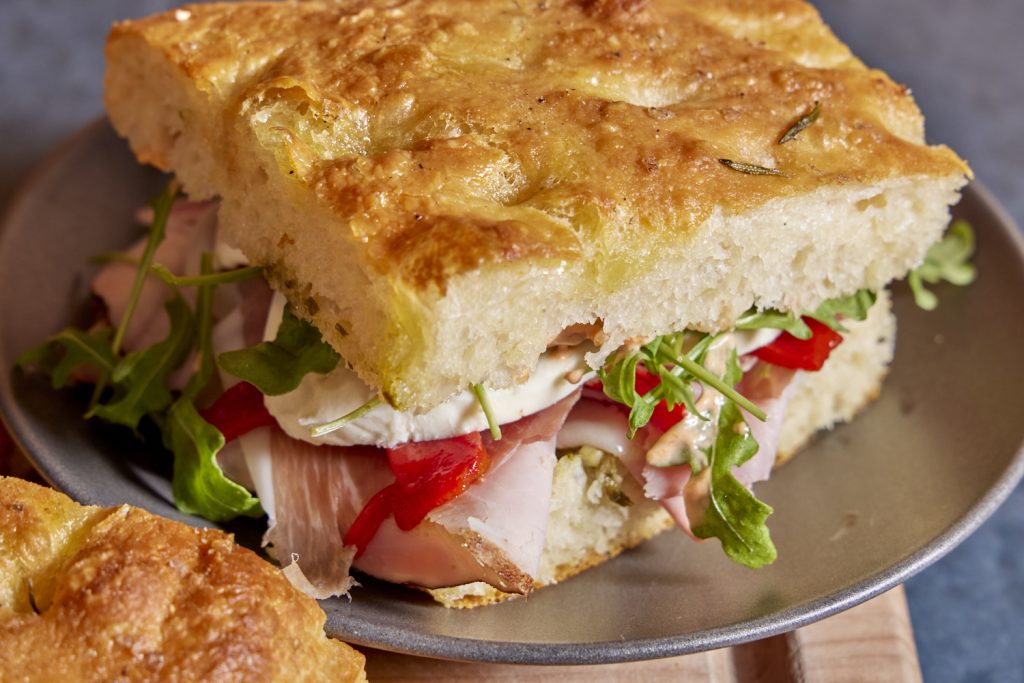
Though the dough is lean, the bread itself practically swims in olive oil. It is doused in it as it rises, oil goes in the pan before the dough does, and the top of the bread is dimpled and generously swathed in more olive oil before baking. The results are incredible. The edges are crisp—literally fried in oil—and the top has crunch but won't cut the roof of your mouth. The overall impression is one of tenderness, of kind yielding, of a deep-fried cloud upon which you can build your best sandwich. Some oil will get into the dough during the folding, but not enough to make this a "rich dough" bread. It's a lean dough bread disguised as a rich dough.
Other critical temperatures for homemade focaccia
We've already discussed doneness temps for focaccia, but there are more places for your thermometer to do its thing, specifically, during the initial dough production. Waking up the yeast so that it is most effective is a thermal matter. Use your Thermapen ONE to make sure the water you use in your dough is 100–105ºF (38-41ºC)—warm enough to activate the yeast, but not hot enough to kill it.
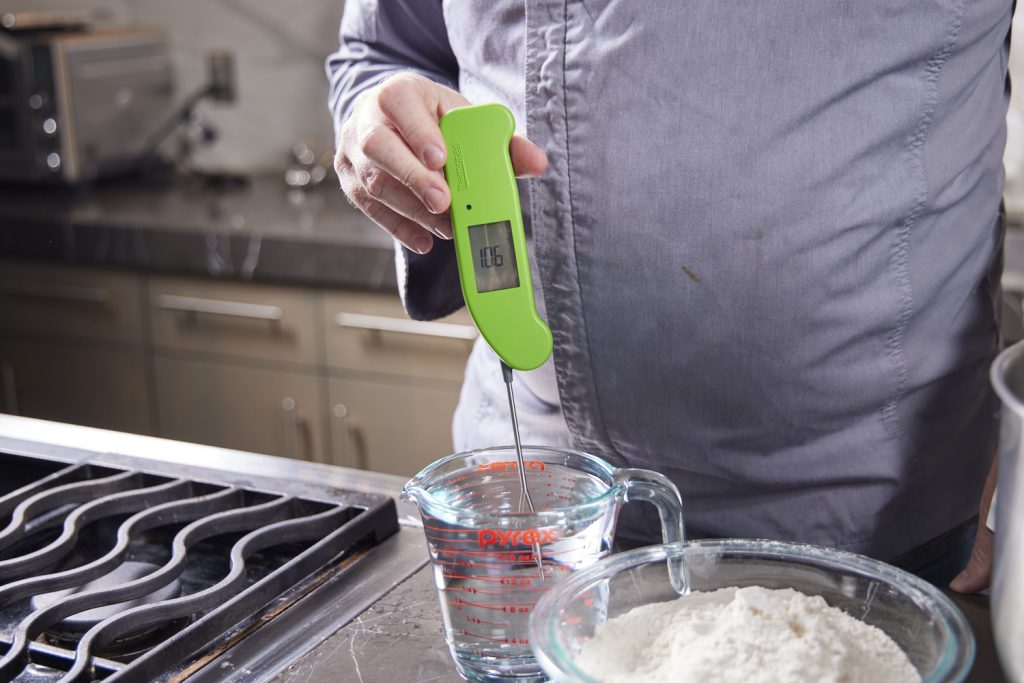
This dough loves a cold overnight ferment, but once you put it in the pan to rise, a nice 85°F (29°C) ambient temperature is best. The final cook is done hot: 450°F (232°C) for 20–30 minutes, depending on its thickness. (Ours took closer to 30.)
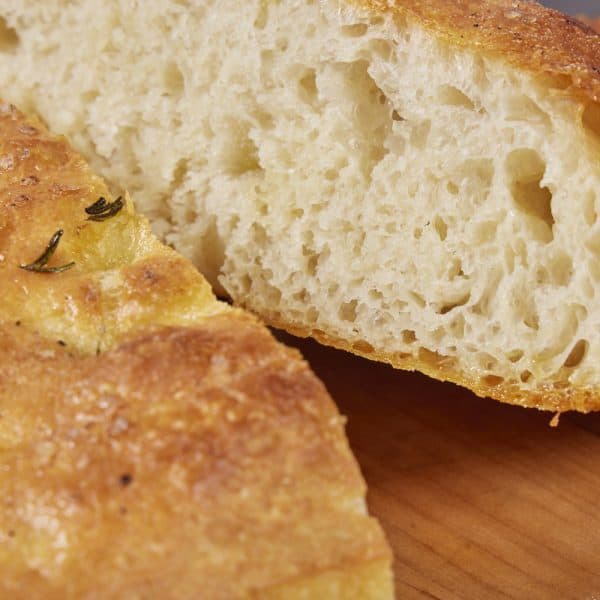
This focaccia is absolutely delicious. When we were finished baking it and taking pictures, we didn't even want to offer any to our coworkers—just a few of us ate the whole thing! It's soft, fluffy, has a beautiful crumb, and, if you follow the critical temps we've noted, sure to come out great. Happy baking!



0 comments