

If there is one cut of meat that straight-up looks good, that cut is the tomahawk steak. It has steadily gained popularity, especially in the age of food-selfies. What better for your Instagram than a picture of you holding a giant piece of savory, crusty-seasoned beef on a bone?
But there is more to the tomahawk than good looks. Read on to learn the thermal secrets to cooking this gorgeous piece of meat. Spoiler: it's not just as simple as throwing it on the grill.

What cut is a Tomahawk steak?
The tomahawk—also called the cowboy ribeye or cowboy steak—is a large bone-in rib-eye steak cut from between the 6th and 12th ribs of the cow and usually weighs between 30 and 45 ounces. The bone in these bone-in steaks is not like the standard bone-in steak bone. It's a foot or more longer than the steak it is attached to. The steak gets its name from its loose resemblance to a throwing axe with a bone handle.
Because it is essentially a ribeye, the meat is usually tender and well-marbled, which is great because there's something special about the flavor and smell of cooked ribeye fat. It's a true crowdpleaser for its rich flavor and juiciness. Also, the steak's frenched bone makes a very impressive presentation. (Frenching is the process of scraping rib-bones clean so they look nice when cooked.)
Is a Tomahawk steak worth the price?
In the end, a tomahawk steak is just a large, bone-in ribeye with a lot of extra bone weight attached to it. Whether you buy your tomahawk to cook at home or buy it at a restaurant, that means you're paying ribeye-steak price for something you aren't going to eat—and since restaurant markup for ingredients is 300%, that means a lot of extra money for, in essence, an amazing presentation. If you're going to eat one of these meat hunks, which are delicious, do it at home!
But if the photo-op/presentation doesn't matter to you, just get a thick-cut ribeye.
What is the best way to cook a Tomahawk steak?
Right up front, the best way to cook a large cut of steak like the tomahawk is to use the reverse-sear method. With a steak that is over two inches thick, thermal considerations come heavily into play. For the reverse sear, first cook the steak over indirect, lower heat. Cooking the steak in a grill that is only 250°F (121°C) will heat the inside of the steak very evenly, giving us more chance at an edge-to-edge pink finish.
Ultra-thick Flintstones-sized double-cut bone-in big-enough-to-serve-two-fully-grown-Thundercats rib-eye steaks require a bit of extra care when cooking. Their thickness makes it all too easy to end up with a burnt exterior and a cold, raw middle... A prewarmed steak will sear much faster, minimizing the amount of overcooked meat under the surface.
The Food Lab, Kenji Lopez-Alt
A Smoke™ is perfect for this part of the cook, as you can monitor both the indirect-heat temperature and the internal temperature of the meat.
Once your steak reaches a temperature about 20°F (11°C) below your desired doneness, you'll want to get your sear going! Heat your grill to high and sear the steak to give it a tempting, tasty crust. Sear it until the crust looks perfect and the internal temp is about 5°F (3°C) below your desired finish temp.
And that brings us to another thermal consideration: carryover cooking. For thinner steaks, carryover is a smaller concern, as there is less thermal mass. But with a steak this large, carryover is going to matter more. This is one reason why using a thermometer matters. If, by some chance, you could accurately tell if a steak were done by touch, telling whether it's going to be done after carryover is a bit trickier.
Since you've spent all that moolah on meat, you should do your best to cook it right, and remember that heat transfer and the careful monitoring of internal temperatures are at the core of a perfect cook. As Kenji says,
... buy a digital instant-read thermometer. You will never over- or undercook a piece of meat again. Do it. No more excuses, no more timing charts or poking with your fingers. Just buy a good thermometer, and don't look back. I guarantee you will not regret it.
The Food Lab, Kenji Lopez-Alt
A Thermapen® ONE is perfect for dealing with the sear. It reads fast—in one second!—so you don't have to put your hand over the high heat for long, and it's accurate to 0.5°F (0.3°C), so you know that you're getting a true reading. No finger-pressing necessary.
Steak doneness chart
| Rare | Medium rare | Medium | Medium well | Well | |
|---|---|---|---|---|---|
| Pull temp | 115–125°F | 125–130°F | 130–140°F | 140–150°F | 155°F and up |
| Final temp | 120–130°F | 130–135°F | 135–145°F | 145–155°F | 155°F and up |
A note on those bones...
The stark-white bone is part of the fun presentation, and we want to make sure it shines. To prevent your bones from charring or getting all smokey, wrap them in foil before you cook them. They'll come out looking much nicer for that brag-photo you'll send your friends later.
How to cook a tomahawk steak
With temperature advice from The Food Lab, by J. Kenji López-Alt
Ingredients
- 2 Tomahawk Steaks
- Salt and pepper
- Fresh herbs, olive oil, garlic (optional)
Instructions
- Set up your grill for indirect cooking. In our case, this meant staring a low fire in a kamado-style cooker with the diffuser plate in place and shutting the vents down pretty far.
- Place the air probe of your Smoke in the grill (following proper probe safety procedures) and set the high-temp alarm to 275°F (135°C) and the low-temp alarm to 200°F (93°C). Once your grill settles down within that range, you're ready to cook.
- Prepare the ribeyes by salting them, peppering them, and rubbing them with a mixture of olive oil and finely minced herbs and garlic.
- Wrap the bones of the steaks in foil to protect them from burning.
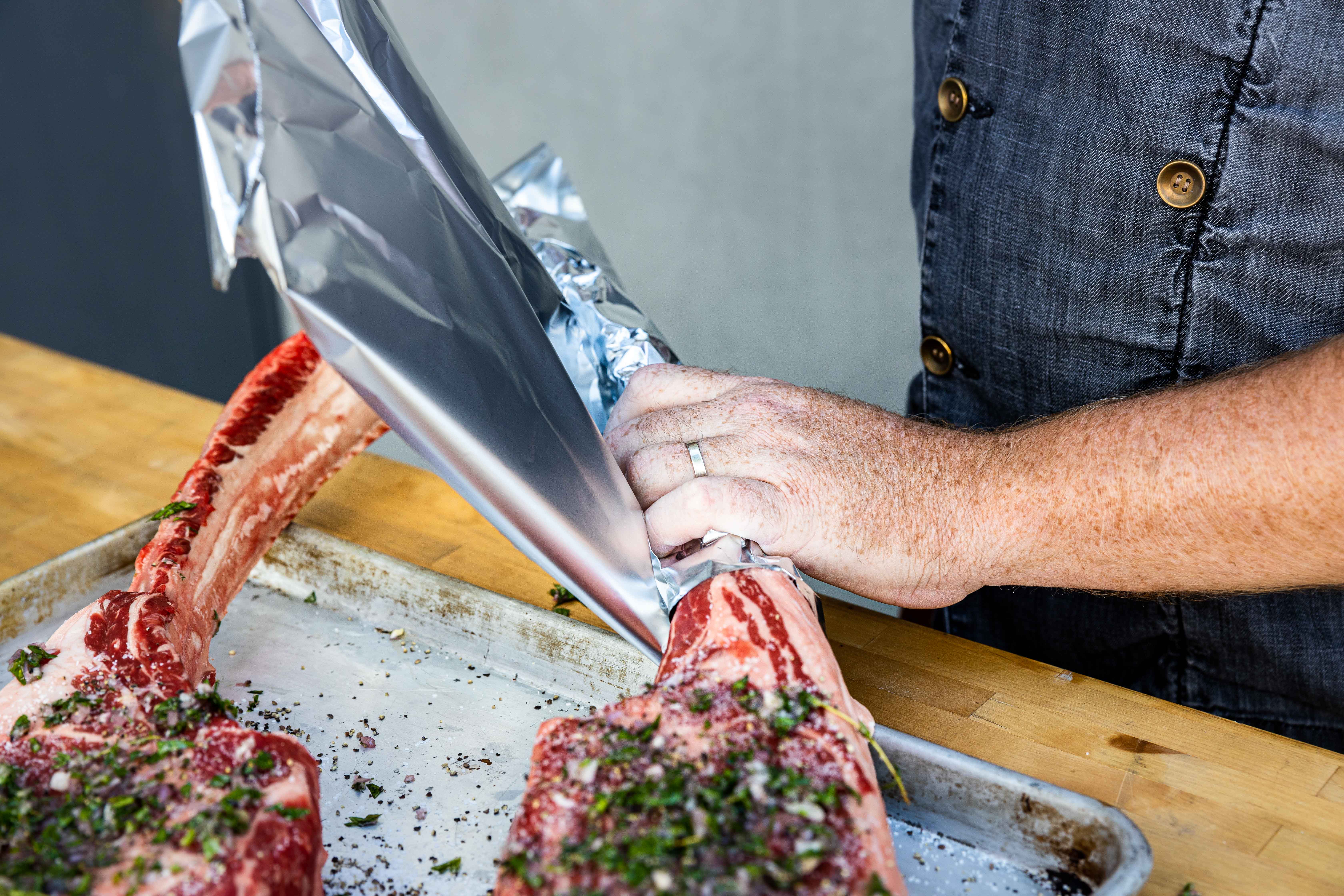
- Place the steaks on your preheated, indirect-cooking grill. Insert the Smoke's meat probe into one of the steaks and set the high-temp alarm for 100–110°F (38–43°C) for rare/medium-rare steaks.
- When the alarm sounds on your smoke, verify the temperature with a Thermapen.

- Remove the steaks and the air probe from the grill and increase your grill's heat to high. (For us, that meant taking out the diffuser plate and letting lots of air in.)
- Remove the probe from the steaks as well, and place the steaks back on the hot grill and cook to sear them.
- Cook the first side for 2–3 minutes, then flip and cook the second side for a few minutes also. Start checking the internal temp with a Thermapen® somewhat regularly to make sure you don't overshoot your target pull temp.
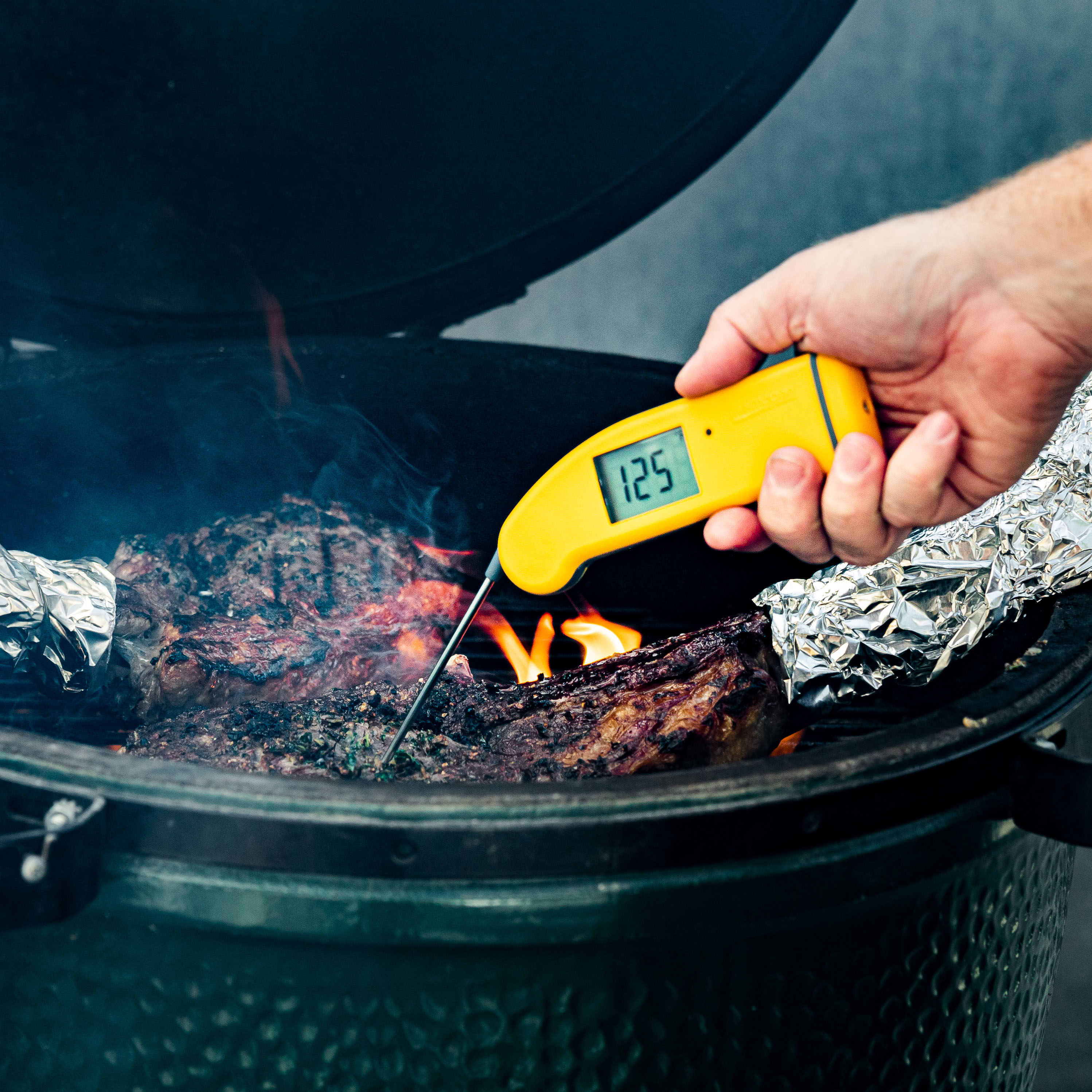
- Pull the steaks from the grill when the internal temperature reaches 125°F (52°C) (for a final medium-rare temperature of 130°F [54°C]), and allow to rest for 5 minutes before slicing and serving.
- Eat up.
When these steaks come to the table, you can bet there will be ooh-ing and awww-ing and reaching for phone cameras—not to mention one or two caveman jokes. But if you've been thermally-minded throughout your cook, what there won't be is complaints about how the steak is cooked. These thick tomahawk steaks need a two-stage cooking process in specific temperature zones and temperature monitoring with a leave-in thermometer and an instant-read thermometer for them to finish just right, and if you give them what they need, the payoff will be, quite literally, huge.




0 comments