

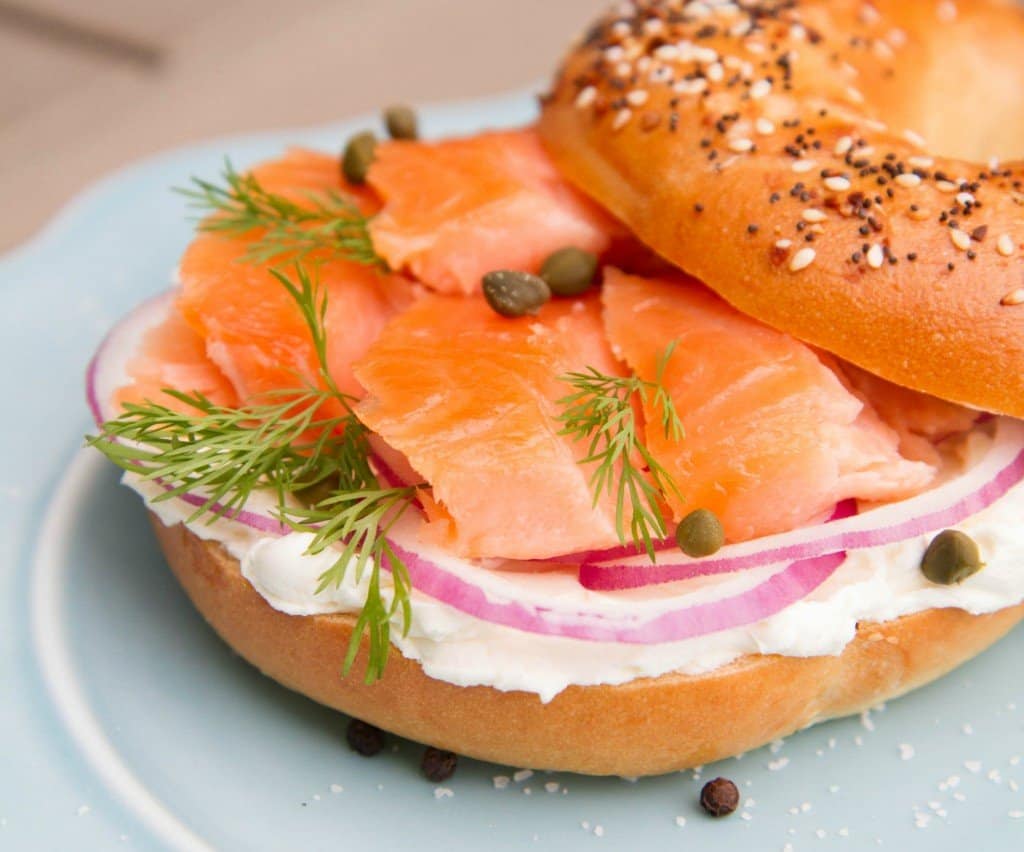
Smoked salmon in all its forms is considered festive fare, and is perfect for a special occasion brunch or a luxurious cocktail snack. Cured fish has been prepared for centuries as a means of food preservation. Thanks to refrigeration and our knowledge of food safety temps, fish is much safer to eat now than it was a couple of hundred years ago. We have the key temps and tips necessary to make sure your smoked salmon has a fine texture and full, rich flavor—perfect for a Sunday morning buffet or breakfast in bed.
Curing Salmon for Smoking
The first step in preparing smoked salmon is the salt cure. It's obvious that a little salt and sugar will add flavor to the fish, but what's going on under the surface is worthy of some scientific exploration. Salt-curing (packing fish in a dry mixture of salt and sugar) and smoking are means of preservation for a reason.
➤ Salt and Sugar at Work:
The salt draws moisture out of the fish—including out of any microbial cells. As the unwanted bacteria die, beneficial bacteria move to the forefront, consuming the sugar in the cure. The lactobacillus bacteria that grow (good bacteria) create a more acidic environment that is even more inhospitable to the harmful bacteria.
➤ The Function of Smoke:
Smoking meat and fish is another tried-and-true way to preserve food, not just a way to add complex smoky flavors. Wood smoke contains chemicals that slow the growth of microbes, and these antimicrobial compounds act as a disinfectant to help prevent spoilage and slow the development of rancid flavors.
➤ Pellicle Formation:
During the salt cure, water-soluble proteins—mainly myosin—are brought to the surface of the fish. When the salmon's surface moisture dries after curing, this dissolved layer of myosin develops a sticky, shiny gel on the surface called a pellicle. The pellicle helps the fish to retain its moisture and aids in smoke penetration during the cook. A fully-developed pellicle is very important to the quality of the final product. Without this tacky skin, the salmon would become very dry. In the recipe instructions below, we have a great tip from Steven Raichlen that gives this process a boost.
The Thermal Difference Between Hot and Cold Smoking
➤ Cold Smoking:
Cold-smoking is a method of preserving fish where the ambient cooking temperature stays in the range of 68–86°F (20–30°C) for 6–12 hours. The flesh loses some of its moisture and becomes denser without being cooked. The exterior of the meat remains soft, rather than hardening as it would when cooked at higher temperatures.
The obvious issue with cold-smoking is the fact that the meat remains in the temperature danger zone (40–140°F [4–60°C]) for several hours. The antimicrobial properties of dry-curing and smoking are what make the salmon safe to eat, but this method may be best left to seafood processing experts with strict sanitation and safety measures in place to monitor pH and water activity to ensure the end result is pathogen-free. We recommend a hot-smoking method that is safer and yields a moist, flaky result that doesn't disappoint.
➤ Hot-Smoking:
Hot-smoking takes place with an ambient temperature in the range of 150–170°F (66–77°C), well above the danger zone. The fish is smoked until the internal temperature of the meat reaches your desired degree of doneness. The higher cooking temperature will kill any existing microbes so you're guaranteed that the salmon is safe to eat. To keep the smoker's cook temp in this range, an accurate thermometer with an air probe and a low alarm (like ThermaQ®) is critical.
Fish Temperatures From Raw to Overcooked:
In his book On Food and Cooking, Harold McGee outlines what happens to the fish at different temperatures during cooking, and its characteristics at those temps.
- 70°F: Soft, slick, smooth, and translucent. Fiber-weakening enzymes are active, and some water begins to escape.
- 100°F: Soft, slick, smooth and translucent with a wet surface due to accelerated water leaking from protein cells.
- 110°F: Protein begins to shrink, the flesh becomes firmer, opaque, and juice is exuded.
- 120°F: Flesh continues to shrink and becomes resilient, is less slick and more fibrous, opaque, and exudes juice when chewed or cut.
- 130°F: Sheets of protein begin to separate and become flaky, fiber-weakening enzymes denature and become inactive.
- 140°F: Proteins continue to shrink, the texture becomes firm, fibrous, and fragile, and little free juice is left. Collagen dissolves into gelatin.
- 150°F: Protein is becoming progressively more firm, dry, flaky, and fragile.
- 160°F: The flesh is stiff and dry. All protein fibers have denatured and coagulated.
For more on salmon temps, as well as other seafood temps, take a look at our recommended temperatures for seafood!
☼ Recommended Smoking Thermometer:
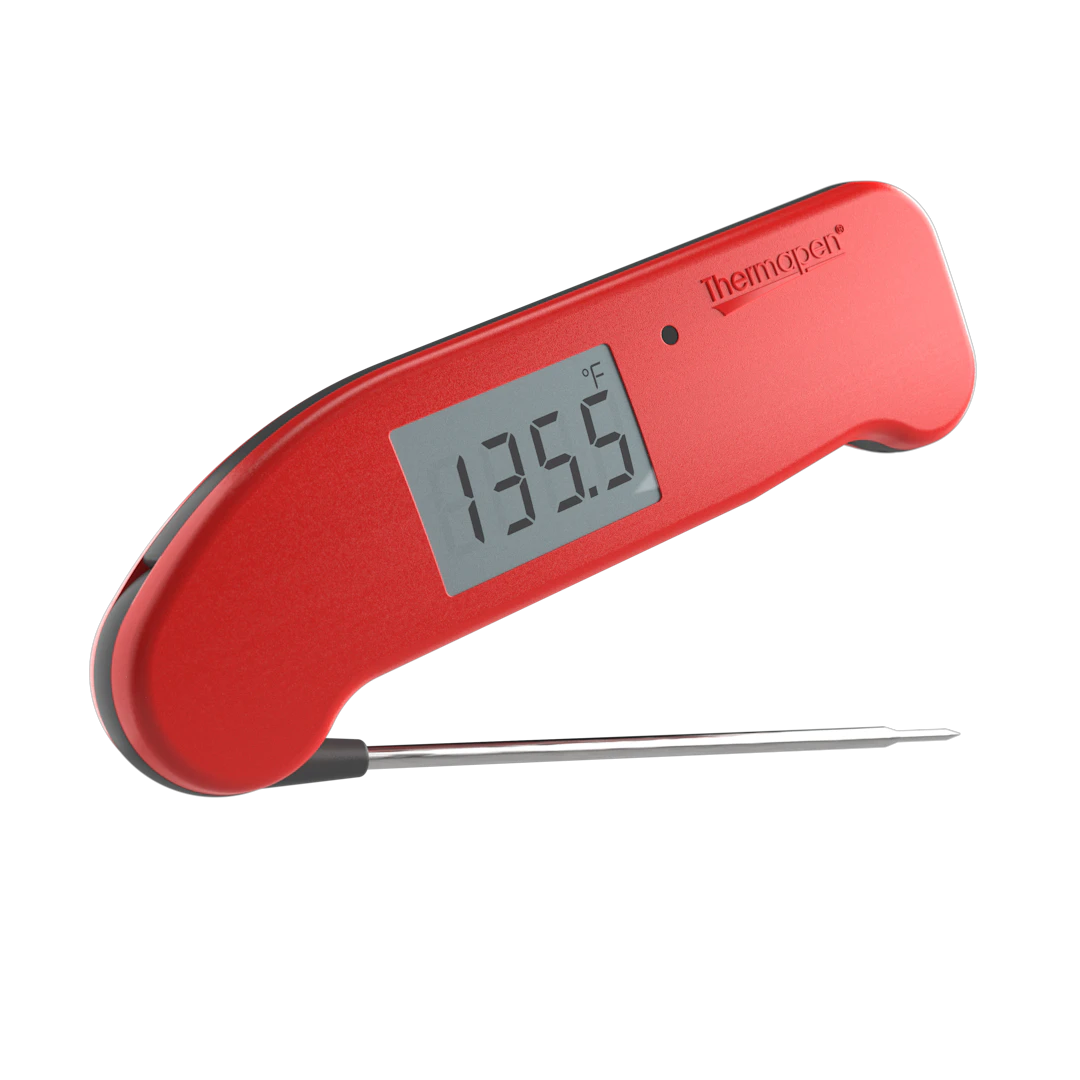
ThermaQ is our thermometer of choice for this project because of its dual channels to monitor both the smoker and meat temp, precision accuracy with thermocouple probes, and the high and low alarms that make tracking the cook temperature range easy.
Smoker Temperature and Meat Pull Temperature
In order to preserve as much of the soft, dense quality of cold-smoked salmon as we can, we're going to smoke ours at a relatively low 150°F (66°C) and pull it once the internal temperature reaches 120°F (49°C). Harold McGee gives a recommended internal temperature range of 120–135°F (49–57°C) for fish because that is the point when its tender protein begins to firm and turn opaque, yet is still juicy. Higher temperatures will yield a salmon fillet that is too dry.
Smoked salmon is something that can certainly be done at home, even if it’s your first time. The only sure way to know exactly when the salmon has reached its perfect texture is through carefully tracking its internal temperature. If you’re a fan of smoked salmon, grab a ThermaQ and give this project a try—it may turn into one of your favorites!
Resources:
On Food and Cooking, Harold McGee
Smoking Fish FAQ, Barbecue Bible, Steven Raichlen




0 comments