

It's funny how things can sound tastier, more exotic, just because we say them in another language. Salsa verde, for instance, sounds delicious, while "green sauce" doesn't. Pasta carbonara sounds almost infinitely tastier than "char-coaler's paste." Smörgåsbord is so much more enchanting than "sandwich table." And Chicken Cordon Bleu certainly sounds tastier than "Blue Ribbon Chicken."
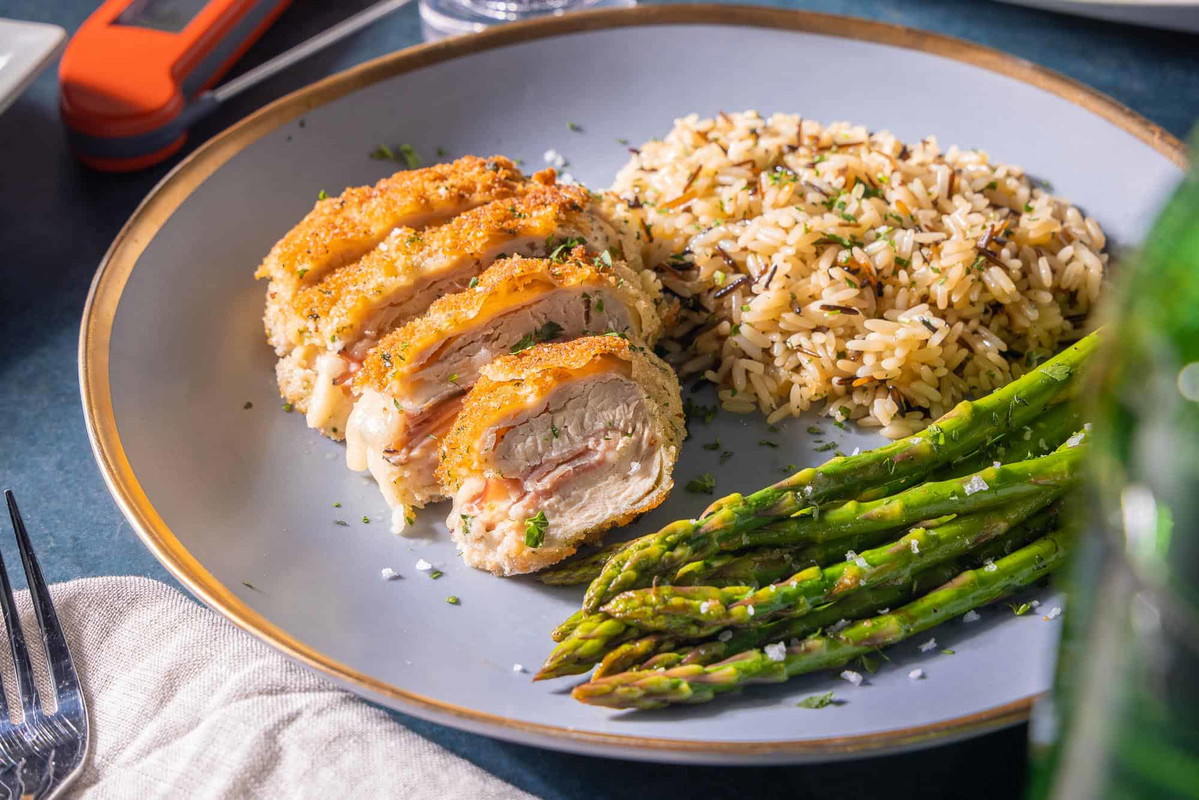
But I may be wrong about that last one. This crispy-fried, cheesy, ham-stuffed dish is at once so definitely appropriate to American food culture that it could, in an alternate world, easily win a blue ribbon at a county or state fair upon its introduction. In this post, we want to share a little bit about cordon bleu and give you a great recipe for it. Of course we'll talk about the thermal tips and temperature tools you'll need to make this modern classic. Let's get cooking!
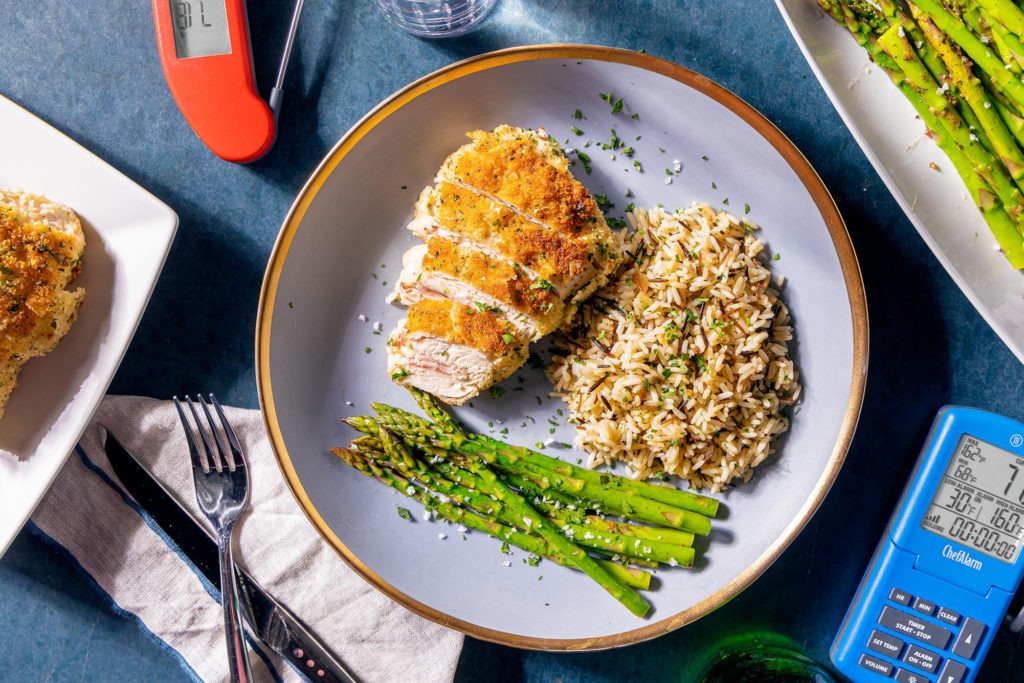
What is chicken cordon bleu?
The term cordon bleu (literally "blue ribbon") was originally a title given to Chevaliers (Knights) of the Order of Saint Esprit, who all wore a special blue sash. The title eventually expanded to anyone who showed particular excellence in their field. This is actually the origin even of our own "blue ribbon" awards!
Codon bleu as we know it seems to have sprung from Switzerland as late as the 1940s. It can be applied to pork, veal, or, as we mostly know it, chicken. In any case, it became popular in America during the Continental Cuisine influx of the 1960s. It consists of a cutlet of meat, pounded thin, stuffed with cheese (preferably an alpine cheese like Gruyere, appenzeller, or, yes, "Swiss"), and often ham. The whole is then breaded and pan- or deep-fried.
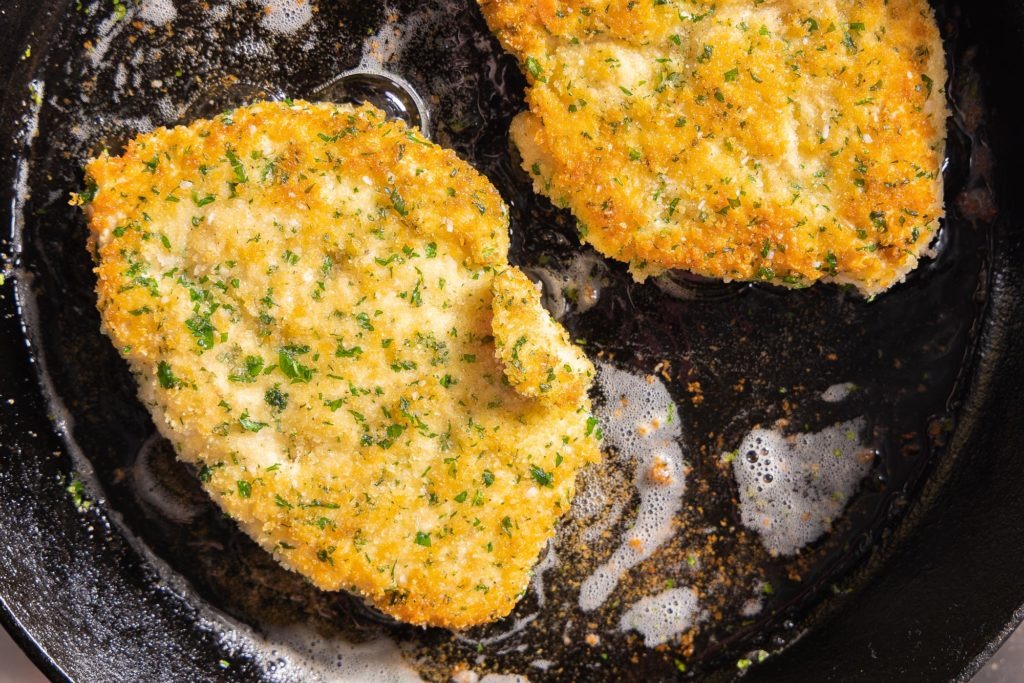
The result is the delicious dish that we all look forward to but rarely cook ourselves. You might be used to making this dish from frozen, perhaps purchased from a certain big-box discount club store, but making it yourself is going to be a bit of a revelation.
What makes good cordon bleu?
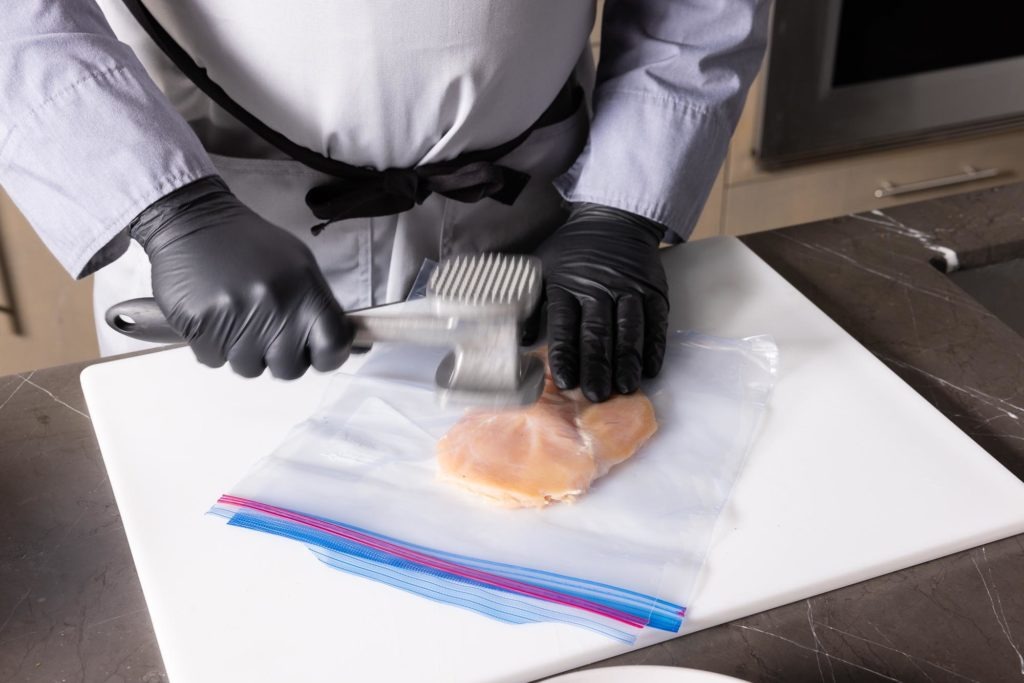
Chicken cordon bleu is, first, a chicken dish, and that means we need our chicken to be safe and juicy. Proper cooking technique (covered below) is key in that regard. To make that happen, though, we need thin chicken. Pounding the chicken breasts thin before we fill them will help them cook more evenly and more quickly.
Next, we want a crisp, tasty crust. It is possible to get a crisp crust by baking cordon bleu, but the very best results really come from frying. Deep frying has its own problems, but we really want that oil-and-high-heat finish! Our cooking method takes care of that.
Then, of course, we want cheese and ham. It's important to consider balance in this area. It's tempting to use a huge chunk of cheese or a lot of ham. But a block of cheese is much likelier to leak out of your chicken and leave a gaping cheese cavity where the cheese once sat. Too much ham? Hard to imagine, maybe, but this is chicken cordon bleu, not ham cordon bleu. The ham is there to season the chicken.
One good slice of cheese and one slice of ham is really all you need to give this dish its key characteristics. You don't need to overdo it … it's already won a blue ribbon, after all!
How to cook cordon bleu
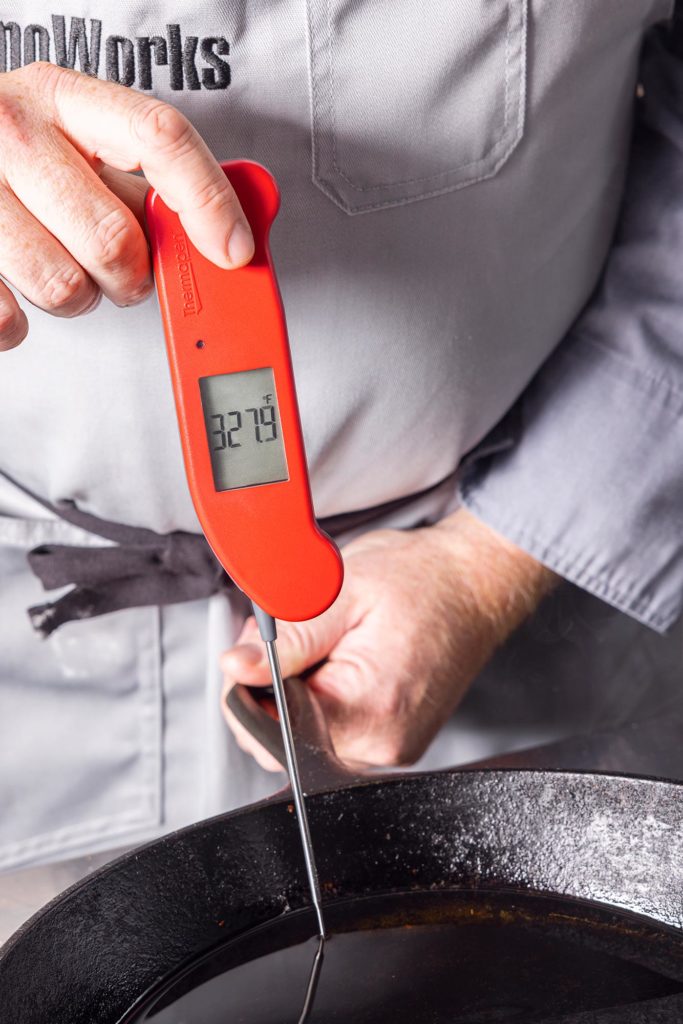
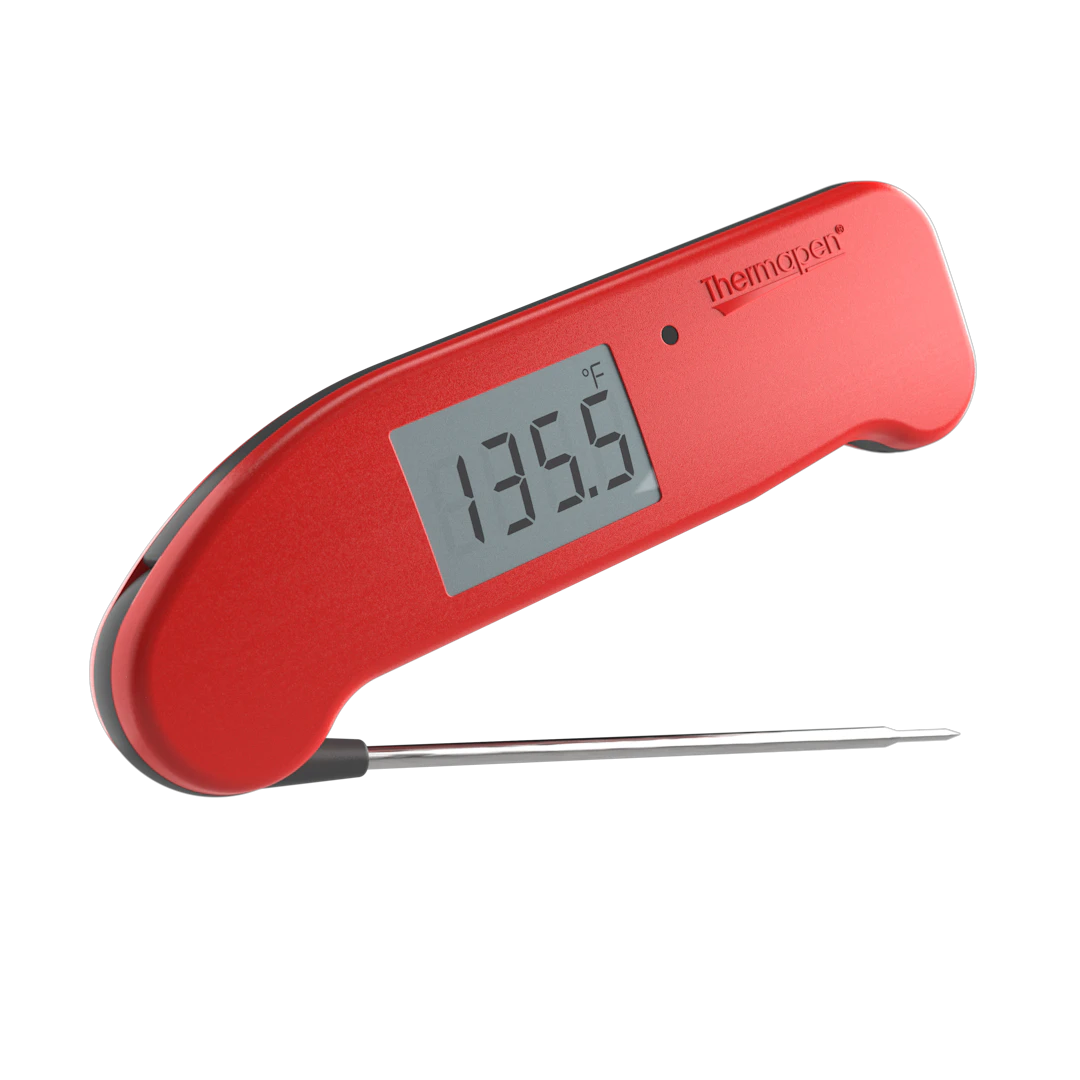
In order to get properly cooked chicken with a nice crisp crust with melty cheese that hasn't run out of the meat, it's best to two-stage this cook. After breading it, we pan fry it in about a quarter cup of high-smoke point oil just until it's beautifully golden brown. That oil should be between 325 and 350°F (163 and 177°C)—a temperature range we can monitor using our Thermapen® ONE. The oil is shallow, so a leave-in probe won't work well, but we can easily temp the oil by tilting our pan and using Thermapen's small sensor to get an accurate read on the situation.
Once the chicken is a beautiful golden brown, we transfer it to the oven and cook it at 375°F (191°C) until it reaches an internal temperature of 160°F (71°C). We don't want to push this to any higher temperatures, or the chicken will dry out! But don't worry, chicken at that temperature is still safe! ChefAlarm® with an optional 2.5" needle probe is perfect for this job, where we have a thin cut that needs precision measurement.
This two-stage cook gives us everything we want from this dish. And it has the advantage of finishing all the pieces at once in the oven at once, rather than cooking them two at a time on the stovetop and waiting for the last batch to cook before serving the first batch to your guests.
You should definitely try this dish. It's far more subtle, and tastier, than its frozen counterpart, and it's achievable even on a weeknight. Whether you call it by its "exotic" French name, or give it a good-ol' County Fair appellation, this dish is well worth the seal of excellence implied in its name. Save it from mass production and bring it into your regular rotation. You'll love it every time.



0 comments