

It's time to start thinking about candy. Halloween is around the corner, then comes Thanksgiving, Christmas...all the candy holidays are stacked together here at the end of the year, and you need to be prepared! If you're thinking of what to serve friends and family, what to give neighbors, or just what to snack on as you watch a scary movie, consider caramel popcorn. Caramel corn is frightfully easy to make and entirely rewarding.
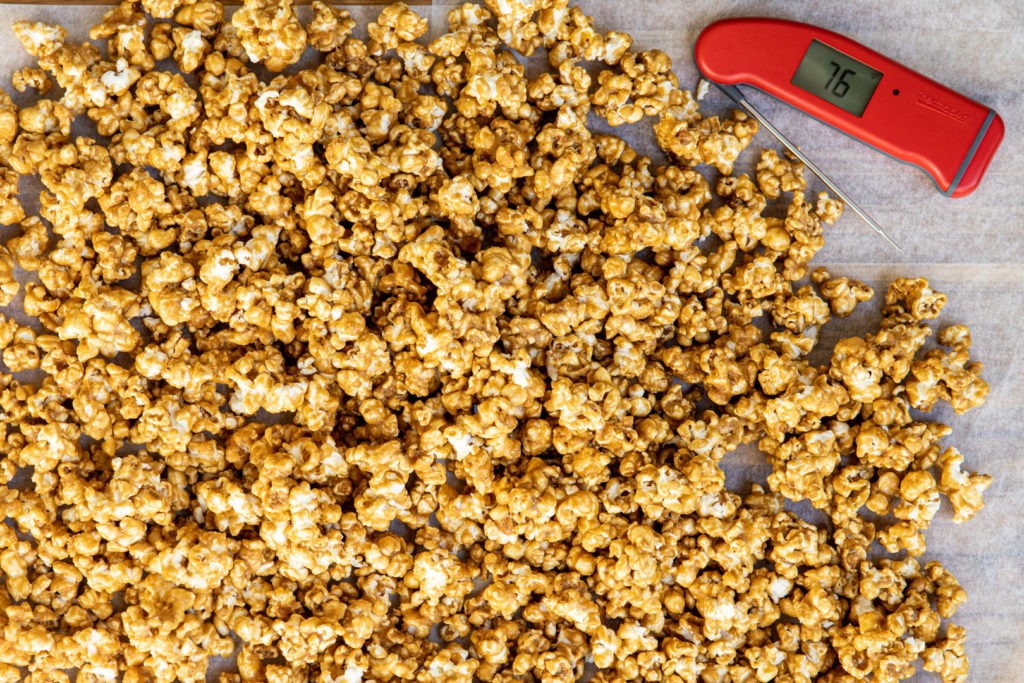
Here, we'll be discussing the methods and temps you need to make irresistible caramel corn. We'll stay close to a recipe from SimplyRecipes.com's Elise Bauer, but there is plenty of room for variation, as long as you stay within the temperature framework that we lay out. The only special tool you'll need is a fast and accurate candy thermometer, like the Thermapen®. Fair warning though: once you start eating this popcorn, you are not going to want to stop.
Sticky caramel popcorn or crunchy caramel popcorn?
There are two camps when it comes to caramel popcorn texture: the gooey/sticky camp and the crunchy/crispy camp. I personally fall into the latter. For me, the drier, crunchier caramel corn is more fun in the mouth, and I like that it can be shoveled in by the handful without getting caramel all over my fingers or face. But I absolutely understand the gooey/sticky crowds arguments. It's more like homemade caramels, and the contrast between the slightly crunchy popcorn and the sticky caramel is intriguing. But what makes them different? Are separate recipes necessary?
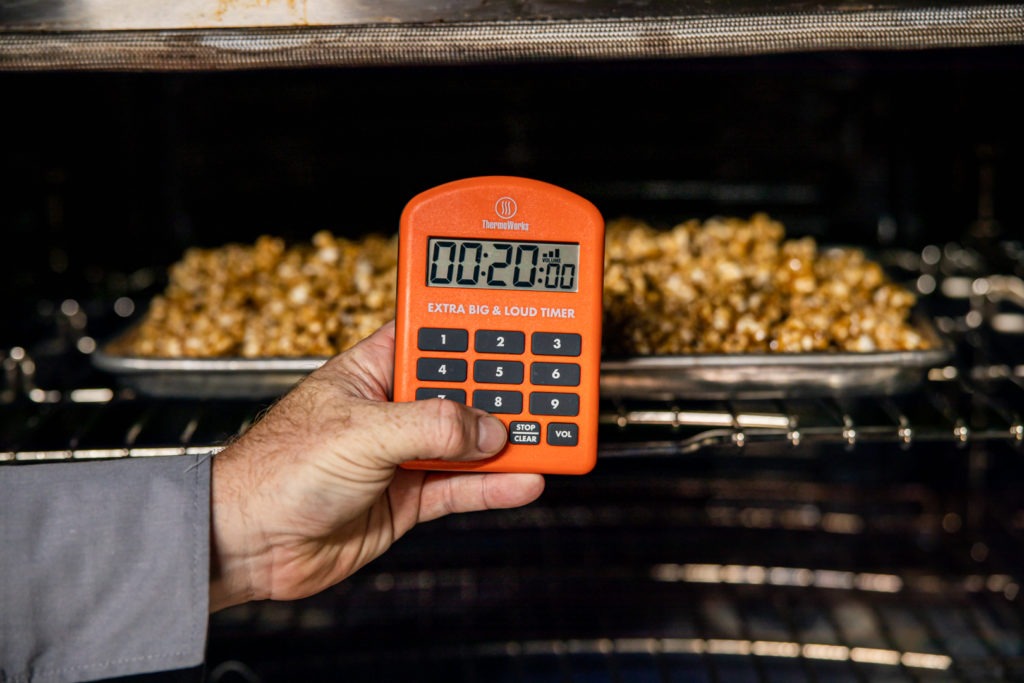
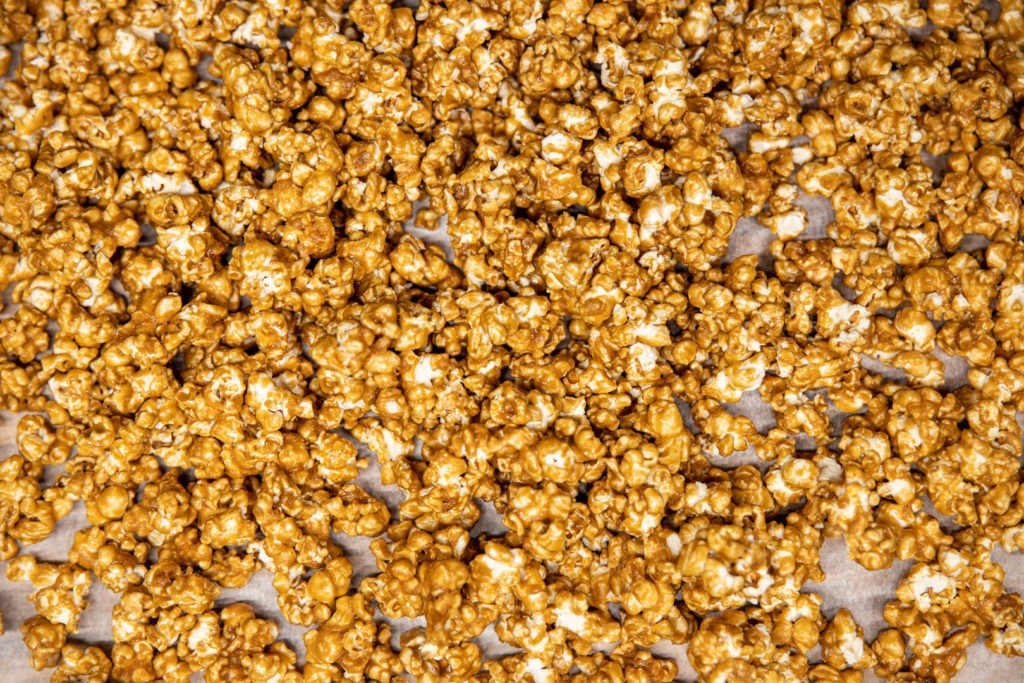
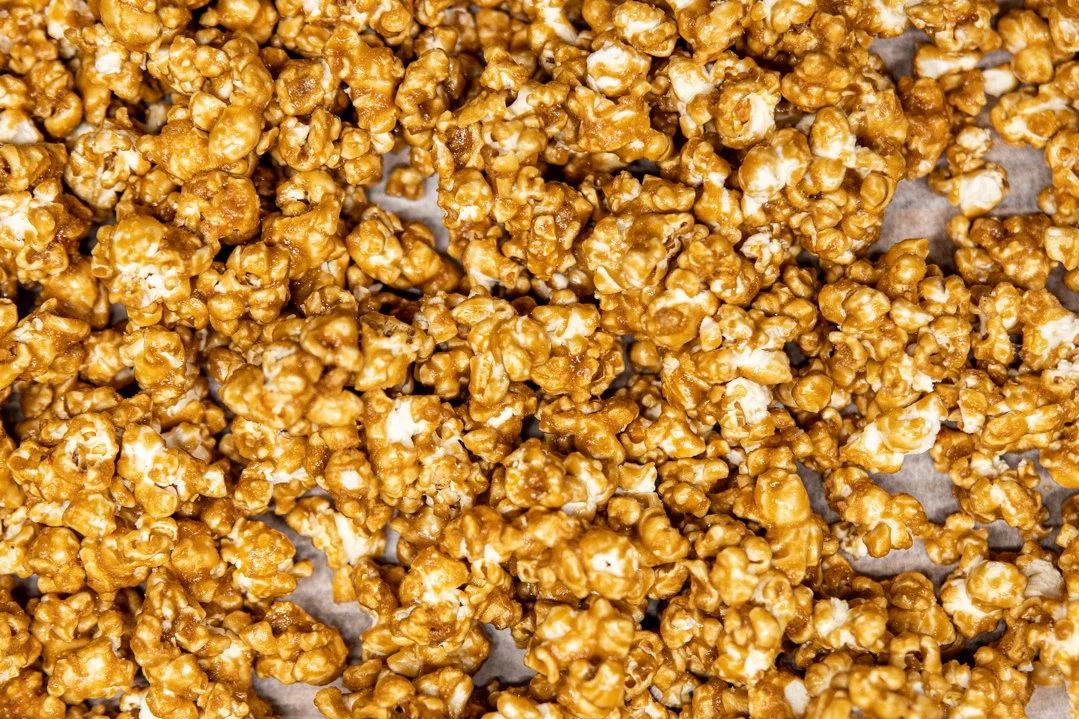
What makes the two versions of caramel corn different is heat, and this recipe can be used for either version, depending on your preference. For a chewy, sticky version, pour the caramel onto the popped popcorn, mix it in, and let it cool until you can handle it. It's super easy, and I'll grant that the simplicity—and speed—of the method does recommend itself over the crispy version. The crispy version, speaking of, employs a low oven—225°F (107°C)—to dry the caramel and the popcorn out in a fast dehydration cycle. You bake the caramel corn for 20 minutes, give it another stir, then bake it for 20 more minutes and break up any large clumps.
Caramel for caramel popcorn
Perfect caramel corn depends on perfect caramel, and this recipe has it. It's made with brown sugar, molasses, and dark corn syrup along with the requisite butter. The brown sugar and molasses give it a deep, rich flavor that is reminiscent of Cracker Jack popcorn. Because there is already plenty of flavor from the sugar molasses and dark syrup, this caramel foregoes the caramelization step you'd see in other caramels, which is intended to develop flavor. Here, all we need to do is get the caramel syrup up to the right temperature: 250°F (121°C). (Be sure to subtract 1°F (0.56°C) for every 500 ft of elevation you're cooking at, otherwise the caramel will get too hard.)
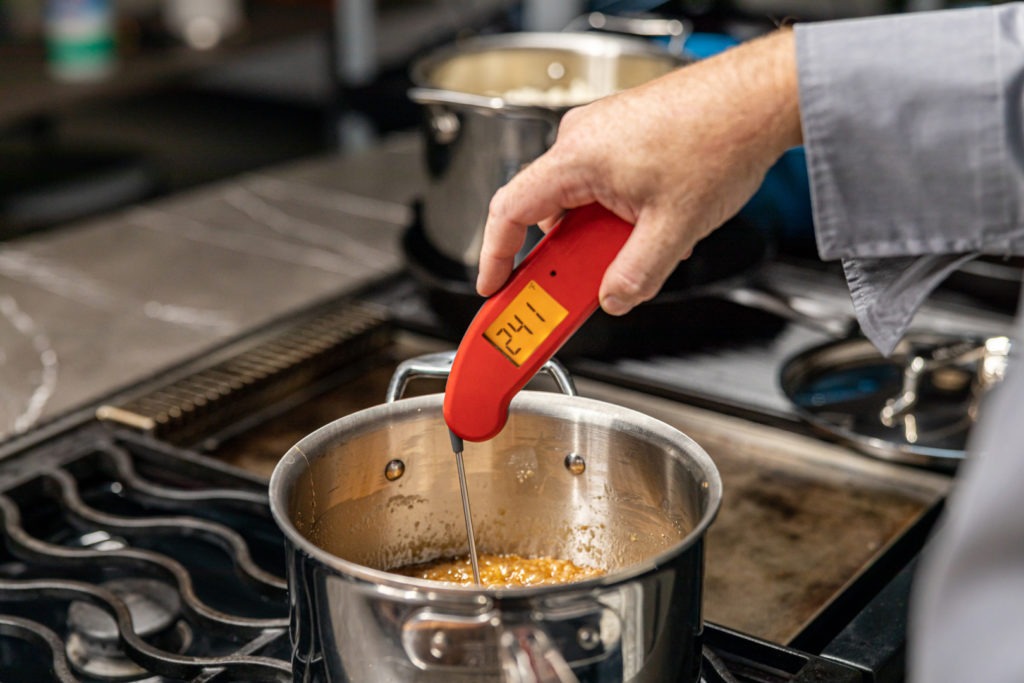
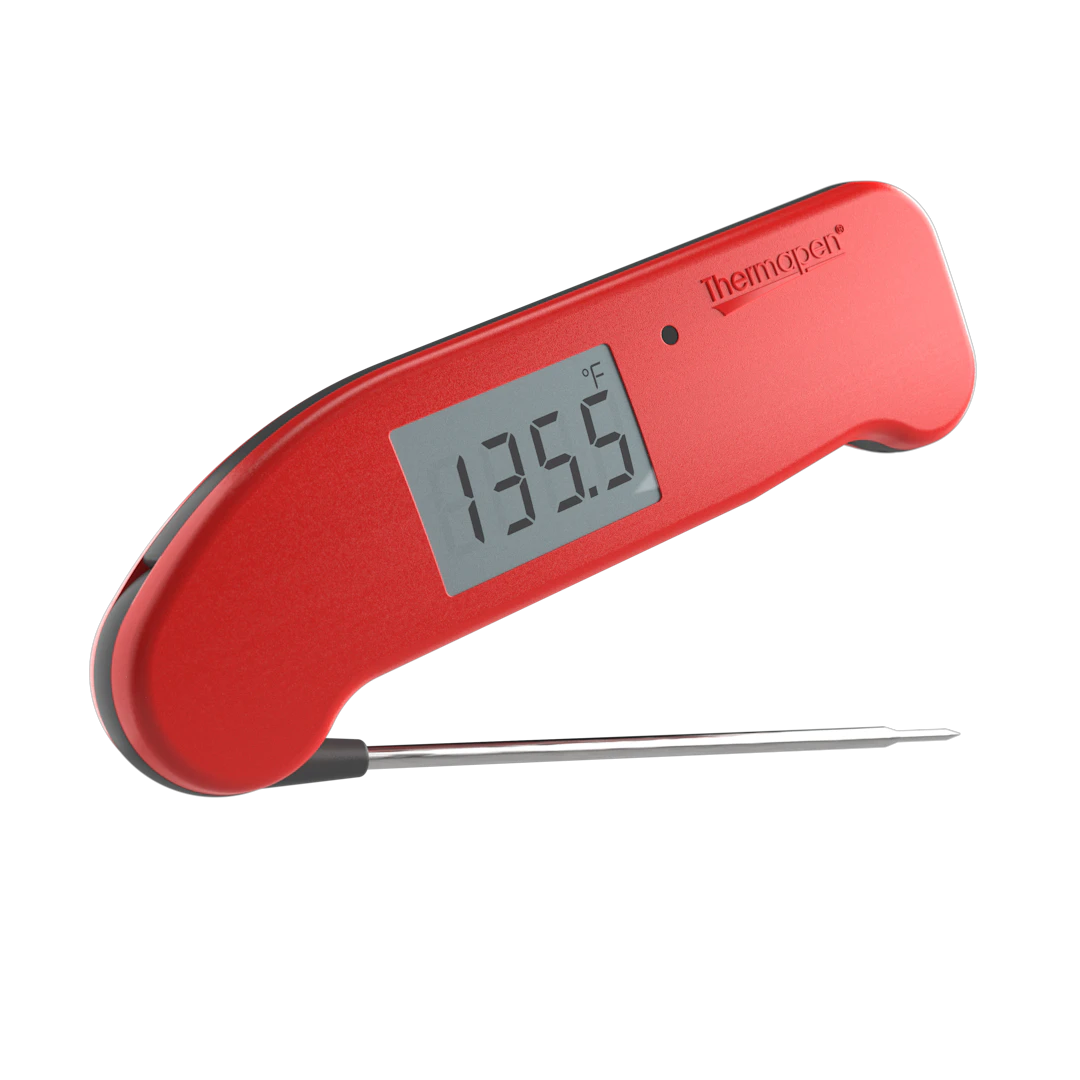
A fast, accurate thermometer like the Thermapen is the best bet for catching the temperature as your sugar syrup heats. Keep a damp rag next to the stove to wipe it off after each measurement.
How to pop popcorn for caramel corn
This recipe calls for 4–5 quarts of popped popcorn, which starts out as about 2/3 of a cup of unpopped kernels. You can, if you have one, use an air popper to pop the corn, but if you don't have one, don't despair, you can always use a pot and your stove.
Take a large-ish pot (larger than five quarts at least) with a lid, pour 2–3 tablespoons of high-smoke point oil into the bottom, and turn on the heat. You can scatter a few kernels of popcorn in the bottom of the pot to gauge when to start the popping in earnest, or you can measure the temperature of the oil with an infrared thermometer like the IRK-2. Harold McGee says that popcorn pops best at around 380°F (193°C).
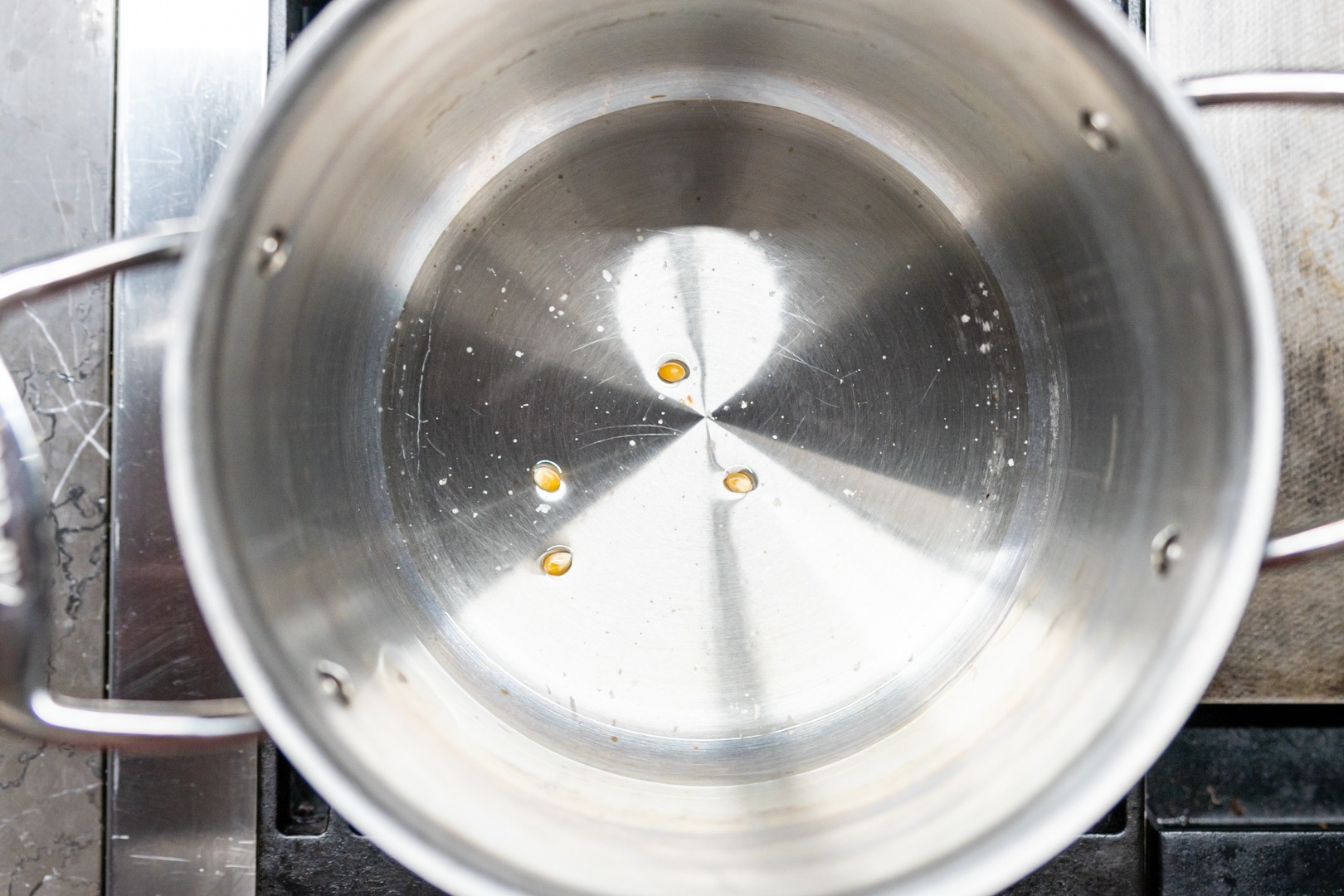
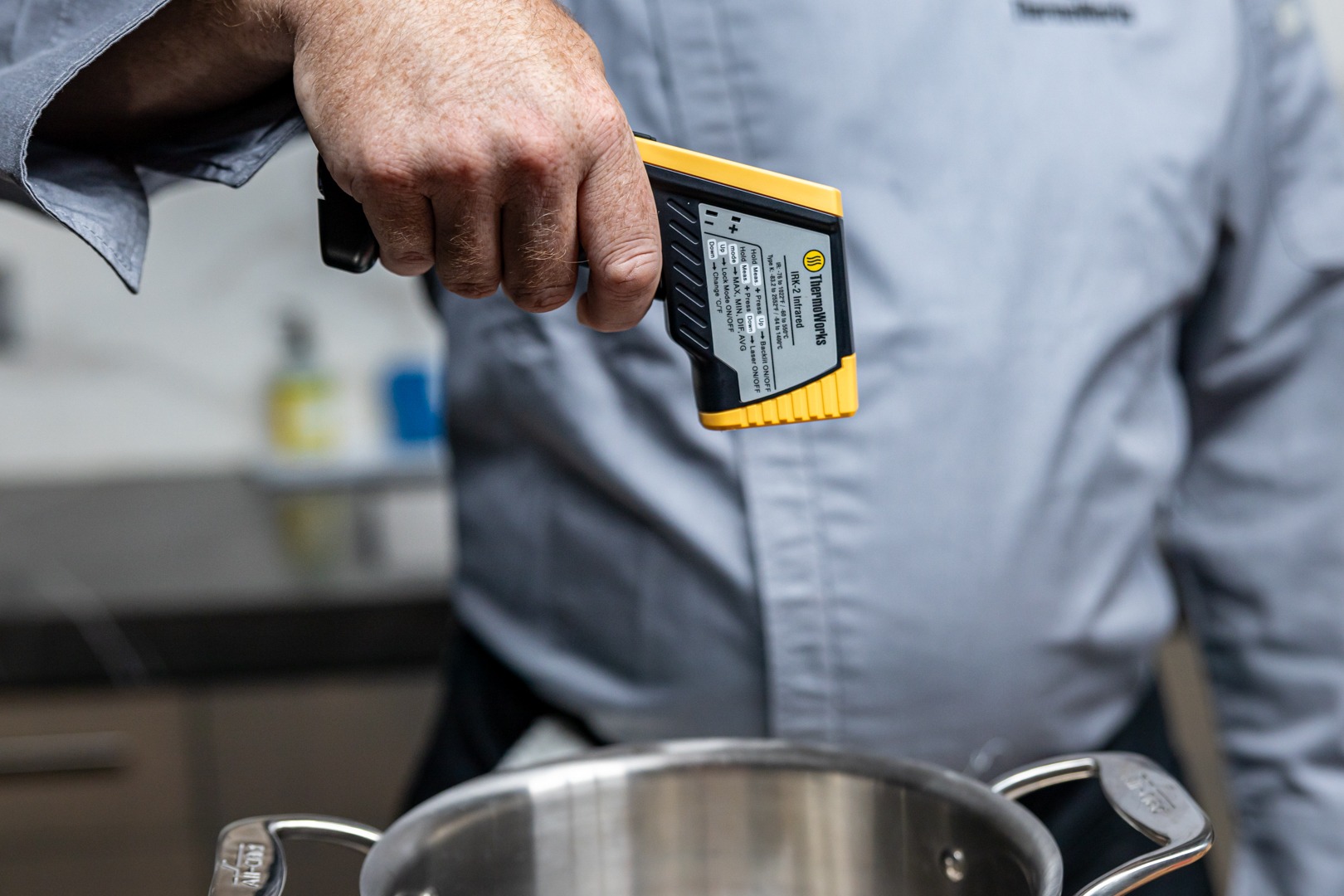
When the oil reaches 380°F (193°C), add the popcorn and put the lid on. When you hear kernels start to pop, start shaking the pan back and forth on the burner. This will help the unpopped kernels sift to the hot oil surface again, where they can pop. When the popping slows to one or two pops per second, pull the pot from heat and remove the lid. Leaving the lid on will steam the popcorn, which will make it softer. Pour the popcorn out, making sure any unpopped kernels stay behind in the pot.
If you don't have an IR thermometer, add the popping corn when one or two of the test kernels pops. This is an old-school method, and we found it results in a higher cook temp than does actual temperature measurement.
This caramel corn is truly amazing, and I can't wait to make it again. If you haven't tried making this treat yet for fear that it's too hard or too complex, it's time to put those doubts to rest. With attention paid to critical temperatures and a Thermapen®, delicious caramel popcorn that you just can't stop eating is easily within your reach.



0 comments