

This may come as a surprise to you, but we here at ThermoWorks like brisket. Shocked? No? Ok, so maybe it's not that big a secret. But here's something that may truly come as a shock: BBQ is not the only way we like to cook it. There I said it.
Though we love a tender, peppery smoked brisket, we occasionally like to mix it up and braise one. It's easier, faster, and just as tasty—though a different kind of tastiness! Today we bring you tidings of a faster brisket method that you might want to employ for your next Holiday gathering, and of course, the temps you need so you can nail it.

BBQ vs oven-cooked brisket
There are two main styles of cooking brisket in America. The one that springs first to the mind is smokey and tended carefully by pitmasters who carefully select charcoal and watch fireboxes. The other is more likely to be made by grandmothers who obsess about if you are wearing a sweater and when was the last time you ate? The first, of course, is barbecue and the second is oven brisket, also called braised brisket or Jewish brisket—based on its popularity and prevalence in that community.
Why would anyone make anything besides classic BBQ brisket? Think of it this way: barbecue brisket takes immense patience, learning to roll with the punches, improvisation, and takes upwards of 12 hours to cook. Oven brisket takes more ingredients and an oven, but is usually done in about five hours. And while the flavor of smoked brisket is delicious, Grandma's oven-braised brisket ends up imbued with flavor that can bring on waves of foodborne nostalgia.
Try this version out. No, braised brisket doesn't make much sense at a tailgate or a Memorial Day picnic—it's far too wintery-tasting for that. But rather than trudge out into the snow to stoke your smoker in the winter, you might consider slaking your thirst for luscious, gelatin-packed beef with an oven-cooked brisket during the winter.
How to cook brisket in the oven
What cut of brisket for the oven?
The standard brisket for BBQ is the full packer, and it's no different for oven-cooked brisket. The only difference is that most of the full-packers used in BBQ are upwards of 10 pounds, a 5–7 lb whole brisket will do just fine in the oven. yes, you can use a giant brisket, just know that you'll need correspondingly more flavoring ingredients and more time to cook it. If you can only locate a flat it'll do fine, but a point on there is even better!

You'll want to trim your brisket in this case just like in BBQ, getting down to a 1/4-inch or so of fat cap. Brisket in the oven should be cooked fat-side up.
Flavoring Brisket
I bragged above about the flavor-depth in a braised brisket and I wasn't kidding. But loads of flavor doesn't have to mean loads of ingredients. Some carrots, celery, lots of onion, maybe some fresh thyme and a few mushrooms provide the flavor, and a splash of red wine gives everything the means to meld together.
Those aromatics provide amazing flavor, but there is another flavor we need: Beef. To increase the beefiness of the dish, you need to brown your brisket before braising it. If you have a large, heavy roasting pan you can brown your brisket right in it on the stovetop. Place it across two burners and heat brown the brisket well on both sides after seasoning it with salt and pepper. If you are using a disposable aluminum pan, brown your brisket under a hot broiler for about six minutes per side, so that it becomes nice and crusty brown. This flavor boost will pay off with big dividends later on.
Oven brisket temps
The chief difficulty faced in cooking brisket is, of course, collagen dissolution. If you don't melt that collagen down, your brisket will be well-nigh inedible, let alone delicious. And of course, the corollary problem with collagen melt is the evaporative cooling that causes the stall.
By cooking the brisket in the oven, we circumvent all those problems, getting brisket in a (comparatively) short time. We cook the brisket at 300°F (148°C), pushing more heat into the brisket more quickly. In addition, we cook it with water-rich vegetables and wine, creating a liquid element of heat transfer, moving heat into the meat by conduction, not merely radiation. (The brisket itself will also drop water into the pan, creating a gelatin-rich sauce with much more liquid than you started with.) And finally, we cover the brisket through the whole cook. We don't wait for a stall to get going before we cover our meat, but create the high-humidity environment from the get-go so that there is no evaporative cooling to deal with.

Oven-brisket doneness
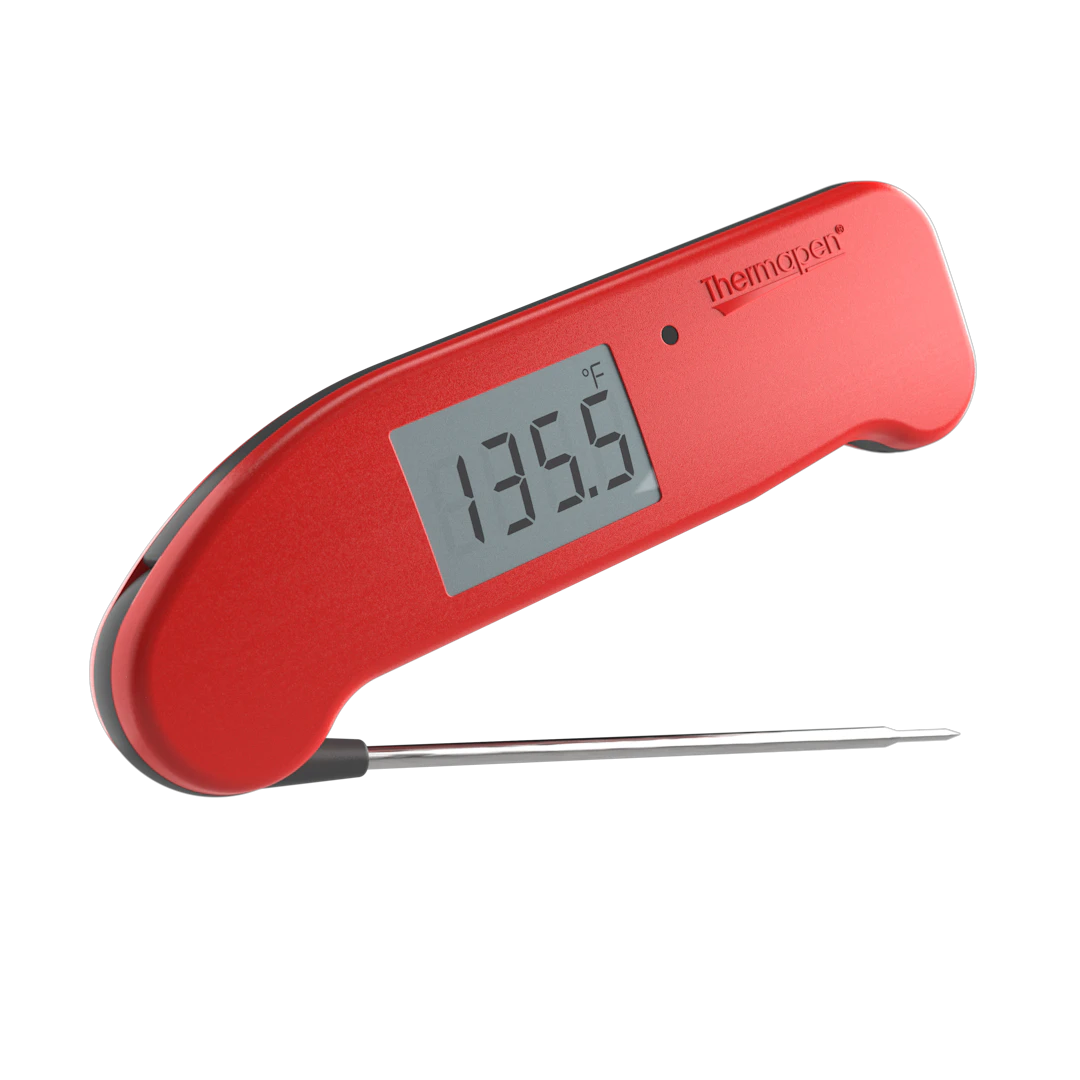
With all those thermal advantages, we can get the brisket done in anywhere from 4–6 hours. But time isn't good enough, is it? We'll get to the standard brisket pull temp of 203°F (95°C) relatively quickly, so the collagen will still need time to melt. Setting the high-temp alarm on the ChefAlarm for 203°F (95°C), then, when that temp is reached, setting the built-in timer on the ChefAlarm for 30 minutes is a great solution.
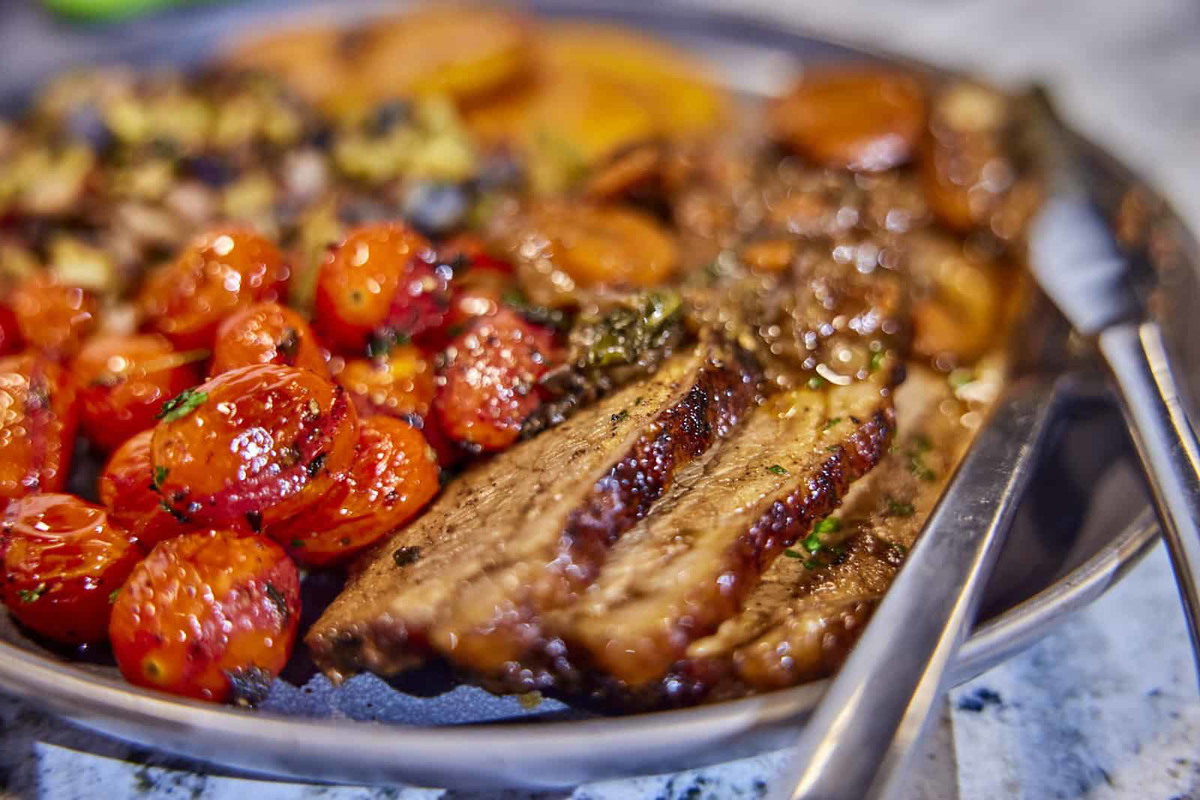
To more fully imbue the brisket with flavor, and to help it store better, the brisket is sliced and then the slices are submerged in the sauce in the pan for a half-hour before serving. And here's a little piece of holiday magic: it's even better if you let it sit overnight. Yes, you can make the main course for tomorrow today. In fact, it's great if made even half a week before serving. Just warm the whole thing up—juices, slices, and all—in a low oven until hot.

Note: To improve probe longevity, stick the probe through the foil, leaving the probe transition safely out of the steam, which can degrade the probe more quickly over time.
Also, play with these flavors any way you like. It's a bit of a blank canvas.
I know it's hard to hear, but this is possibly the most amazing brisket you may ever eat. Yes, it's different from your standard BBQ fare, but give it a chance. With the ChefAlarm as your guide, you're bound for a Holiday dinner like no other. All those Grandmas who have been making it this way for generations aren't wrong! Happy cooking, you're going to love this.


0 comments